
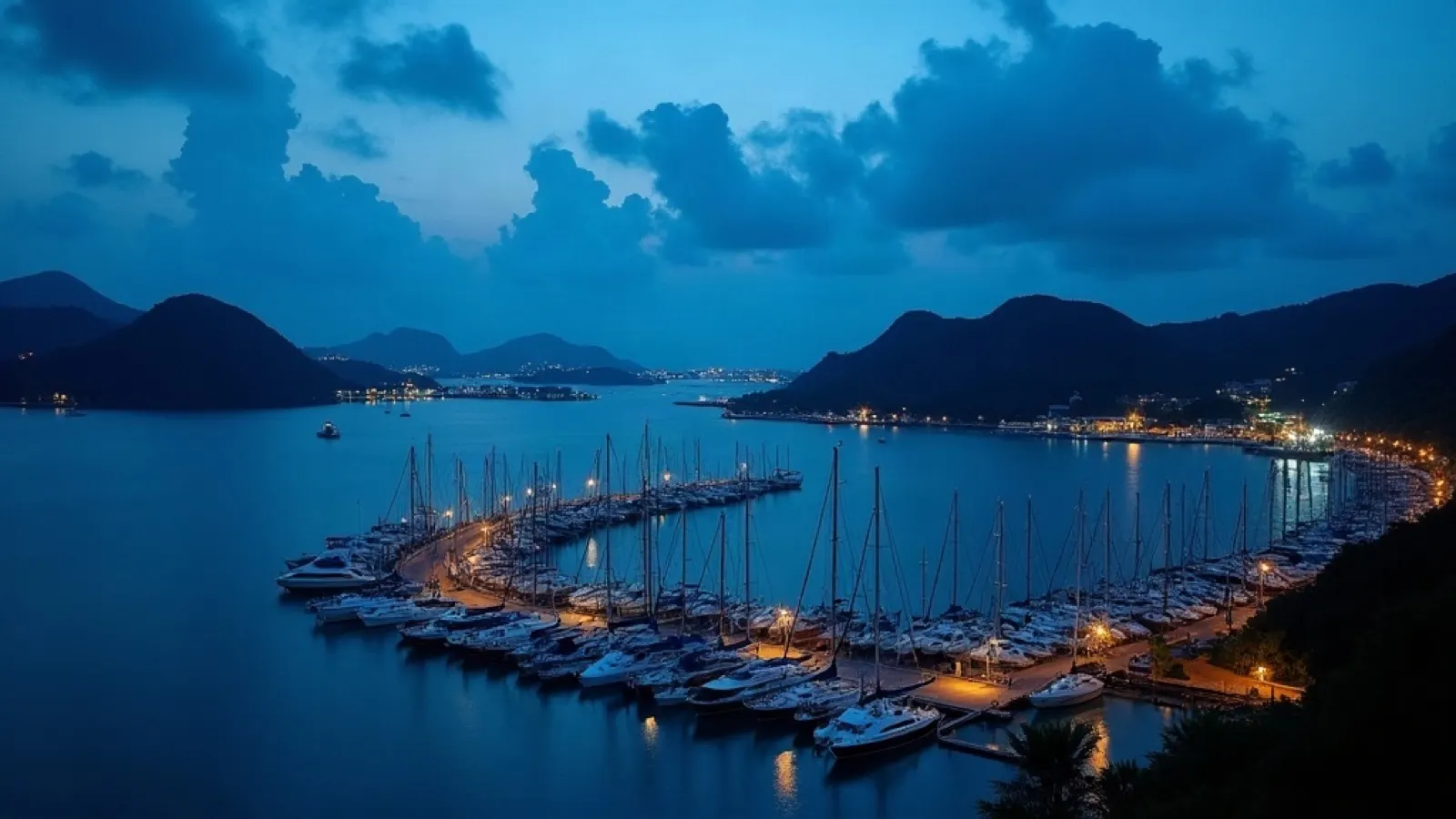
Most owners price a berth the way they price fuel: a line item to minimise. This guide argues the opposite case with numbers. In Labuan Bajo — the sole practical gateway to Komodo National Park — a standing berth changes how much a phinisi can earn, how fast it degrades, and how it is underwritten. We publish this as an independent guide to the harbour; the arithmetic below is the kind owners run before signing a seasonal agreement.
The Economics of a Secured Berth
Start with the base figures. Monthly berthing in Labuan Bajo runs $600–$3,000 by length and position, so a year costs roughly $7,200–$36,000. A mid-size charter phinisi running the Komodo season books in the hundreds of thousands of dollars across a good year. The berth is therefore typically 3–8% of gross — and it buys three things that move the other 92–97%:
- Turnaround speed. Alongside access means provisioning, fuel, laundry, and guest exchange happen in hours, not tender cycles. One extra charter departure saved per season usually covers several months of berth fees.
- Schedule certainty. Operators holding standing berths board guests on time in conditions that force anchored fleets to delay. Cancelled or shortened trips are the single most expensive event in a charter calendar.
- Position in the queue. Allocation in this harbour favours standing agreements first, monthly holders second, visitors last. In July and August that order is the difference between working and waiting.
Berth Versus Anchorage: the Owner’s Ledger
The bay’s anchorage is free, and for idle months it is a defensible choice. For a working phinisi the hidden lines add up: continuous tender running to move crew and supplies, faster anodes-and-antifouling cycles from constant engine and generator hours at anchor, chafe and ground-tackle wear through the wet-season swell, and crew fatigue that shows up later as maintenance debt. Owners who have run both models usually find the anchorage saves the berth fee and quietly spends much of it elsewhere. The structural comparison in our phinisi berth guide for Labuan Bajo lays out the berth types this harbour actually offers.
Insurance is the sharpest edge. Underwriters increasingly ask where the vessel lies during the December–March wet season, and a documented berth or managed mooring reads very differently from open anchorage when a claim is assessed. For some policies the premium delta alone closes most of the berth-cost gap.
What a Long-Term Berthing Agreement Should Cover
Seasonal and annual agreements here are short documents, and owners should negotiate the points that matter before demand peaks:
- Tenure and renewal priority — first right to renew is worth more than any single season’s rate as the harbour fills.
- Rate basis — fixed for the term, stated per metre, with utilities metered separately.
- Substitution rights — the ability to swap in a sister vessel keeps the berth earning if your hull is at the yard.
- Wet-season terms — storm procedures, required insurance, and who moves the vessel if weather protocols activate.
Current rate benchmarks for each arrangement are maintained in our marina pricing and cost guide.
The Berth Inside a Wider Phinisi Investment
A berth decision rarely stands alone. Owners entering the Komodo market are usually weighing construction or acquisition, charter positioning, and exit value at the same time, and berthing rights increasingly feature in how those deals are priced — a phinisi sold with a transferable Labuan Bajo berth is a stronger asset than the same hull without one. For the capital side of that equation, structured phinisi investment programmes at the Komodo gateway are run by the Komodo Luxury services desk, which models berth economics alongside build cost and charter revenue; this guide covers the shoreside half of the same calculation.
Demand Through 2027
Every structural signal points the same way: park visitation is climbing, the charter fleet keeps growing, and berth supply expands slowly because waterfront is finite. Our 2027 outlook for Labuan Bajo marinas tracks the expansion projects in detail — the short version is that new capacity is arriving later than new hulls. Owners who secure tenure now are buying tomorrow’s scarcity at today’s rates; owners who wait will bid against a longer queue.
Owners weighing their timing should also read the berth demand forecast for the 2027 Komodo gateway before committing capital to a berth position.
Frequently Asked Questions
Is a Labuan Bajo berth worth it for a phinisi that only charters part of the year?
Usually yes, on a seasonal agreement covering the operating months. The turnaround and insurance benefits apply exactly when the vessel is earning, and the anchorage remains available for idle periods.
How much should an owner budget for annual berthing in Labuan Bajo?
Roughly $7,200–$36,000 per year, built from monthly rates of $600–$3,000 depending on vessel length and berth position, with utilities and clearance formalities on top.
Can berthing rights transfer when a phinisi is sold?
Only if the agreement says so. Transferability is negotiated case by case, and a berth that can follow the vessel measurably strengthens resale value at the Komodo gateway.
Does a berth improve a phinisi’s insurance position?
Often. Underwriters ask where the vessel lies in the wet season, and a documented berth or managed mooring is viewed more favourably than open anchorage when policies are priced and claims assessed.
Weighing a seasonal agreement for your vessel? Put your dates and particulars to our berthing enquiry desk and we will route you to the right marina office.