How to Choose a Labuan Bajo Marina for Your Yacht Size, Draft, and Itinerary
I treat Labuan Bajo as the gateway control point for every Komodo and Flores Sea program. Pick the wrong marina and you fight depths, swell, slow bunkering, awkward guest transfers. Choose well and Labuan Bajo turns into an efficient base for phinisi, superyachts, and liveaboards.
This guide walks you through how to choose a Labuan Bajo marina using hard factors: length overall (LOA), draft, swing room, guest flow, tenders, Komodo routing, and seasonal weather. I’ll reference real distances, typical depths, and what I see working for charter and private programs on 20–60 m vessels.
1. Start With the Basics: LOA, Draft, and Maneuvering Room
When I plan a Komodo season, I start not with “nice marina” but with numbers.
- Length overall (LOA): Labuan Bajo sees everything from 12 m monohulls to 60+ m motor yachts and 50 m phinisi. Confirm the marina’s maximum LOA and turning circle ahead of time.
- Draft: Most yachts here sit between 1.8–4.5 m. Some steel phinisi push towards 5 m when fully loaded. Depth becomes critical on spring low tides and at older piers.
- Beam and windage: Komodo funnels wind. A 50 m superyacht with high topsides behaves very differently in a crosswind than a low-profile sailing cat.
- Approach channel: Check for reefs, fishing skiffs, aquaculture, and night lighting. Labuan Bajo’s bay is busy, especially around sunset when boats return from day trips.
In practice:
- Yachts under ~20 m: You have the most flexibility. Almost any commercial quay or marina solution around Labuan Bajo can handle your size, but swell and surge still matter.
- 20–40 m: You need confirmed depths at LAT, reliable fendering, and more structured berthing. This is the sweet spot for many local phinisi.
- 40–60 m+: You plan your entire Komodo operation around where you can actually berth safely, bunker, and board high-end guests without drama.
When you speak with any operator, including Labuan Bajo Marinas, have your LOA, beam, draft, and expected arrival windows ready. That one email saves three days of back-and-forth.
2. Matching Marina Options to Vessel Type: Monohull, Cat, Phinisi, Superyacht
Labuan Bajo is currently more of a working charter hub than a classic “Riviera-style” marina. That’s changing, but you still need to think like a practical skipper.
Monohulls and smaller cruising cats (12–18 m)
- Shore power and water access for turnarounds.
- Short walk to provisioning, fuel, and crew accommodation.
- Easy dinghy access for Komodo day hops and dive trips.
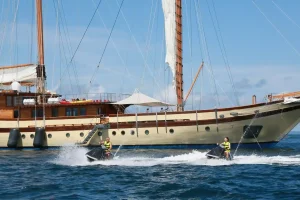
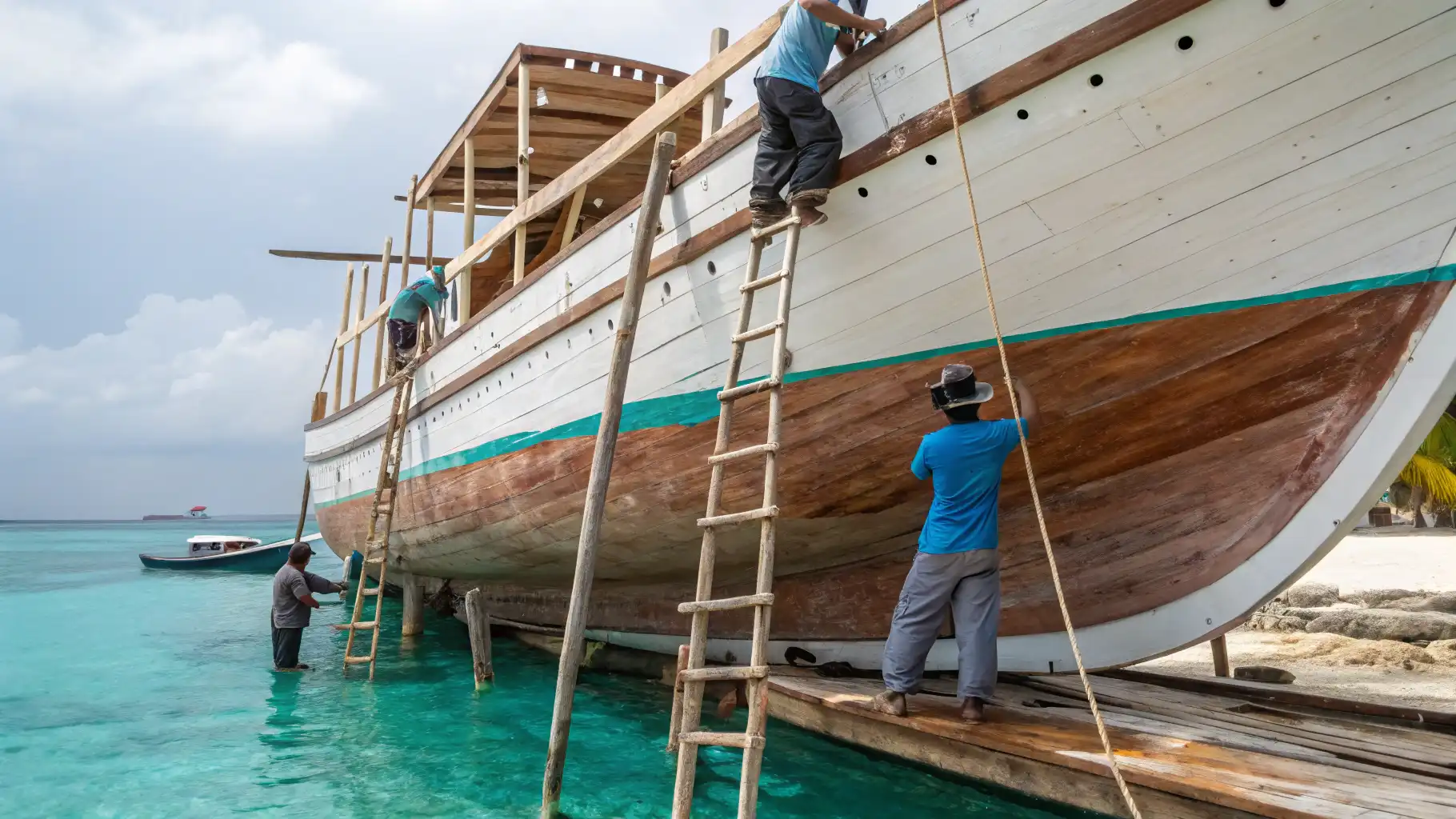
Phinisi and Indonesian-flag liveaboards (25–50 m)
- Side-to berthing along solid quays for cargo, dive gear, and guest luggage.
- Room for multiple tenders (often 2–3 RIBs) operating continuously.
- Proximity to shipyard or repair facilities for annual class and refits.
Superyachts (40–80 m)
- Secure, controlled access pier or dedicated berthing / mooring solution.
- Reliable bunkering (MDO/AGO) with tested supply chain and clean fuel handling.
- Discreet VIP arrival/departure zones, helicopter transfer coordination if required.
A specialized operator like Labuan Bajo Marinas focuses on exactly these segments: phinisi fleets, charter yachts, and superyachts. When you review options, check how many boats of your size they currently handle; that’s usually more telling than any brochure.
3. Depth, Swell, and Holding: Marinas, Moorings, and Anchorages Around Labuan Bajo
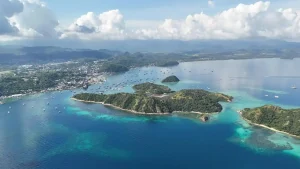
Labuan Bajo sits on the northwestern coast of Flores, facing the Flores Sea. The area combines built quays, planned marina developments, organized moorings, and classic anchorages.
You have three practical choices:
- Alongside / marina-style berthing: Ideal for provision-heavy turnarounds, crew change, yard access, and high-end charters starting or ending in town.
- Moorings: Useful for mid-turnaround rests and lighter provisioning. Less impact from surge than some quays.
- Anchoring in the bay: Traditional solution. Good holding in sand/mud in many pockets. Requires strong tender logistics and shore support.
Key depth and swell considerations:
- Depth ranges: Labuan Bajo bay shelves quickly from 3–5 m near shore down to 20+ m. You can usually anchor safely outside the main ferry routes with 25–40 m scope in 8–15 m depth.
- Swell and ferry wash: Fast ferries and local traffic create short, sharp chop that can work your lines hard against concrete. Good fendering is non-negotiable.
- Current: Inside the bay, current is manageable. Out in Komodo channels, it becomes a primary navigation factor with 3–6 knot runs in places such as around Rinca and between Komodo and Padar.
This is exactly where a structured guide or local agent helps: they point you to the specific corners of the bay that match your draft, swing room, and noise tolerance, and they advise when a mooring or alongside berth makes more sense than yet another night at anchor.
For general context on Indonesia’s geography and maritime zones, the Geography of Indonesia entry is a useful background read.
4. Fuel, Water, and Provisioning: Turnaround Planning for Komodo Routes
Komodo National Park has zero marinas and no reliable fuel docks. What you load in Labuan Bajo keeps your operation running across the park’s 1,800+ km² area.
Fuel
- Expect diesel to be trucked or barge-delivered to the pier for most larger yachts.
- For vessels above ~30 m or with high-consumption generators and dive compressors, book fuel at least a week in advance in high season.
- Ask specifically about filtration, water content testing, and how hose cleanliness is managed from truck to your manifold.
Water
- Some yachts rely entirely on watermakers; others top up in Labuan Bajo to keep redundancy.
- Check pressure and flow rate at the berth. Time your water loads with crew shifts and provisioning so you don’t lose hours waiting on a slow line.
Provisioning
Labuan Bajo town now supports:
- Cold chain products (imported meats, cheeses) in a limited but workable range.
- Fresh fish, squid, and prawns arriving daily from local grounds.
- Basic wines and spirits; premium labels require planning or transport from Bali/Jakarta.
For premium charter, I often combine:
- Main dry / high-end orders shipped from Bali in reefer boxes.
- Fresh produce and fish sourced locally 24–48 hours before embarkation.
- Last-minute items and special dietary needs coordinated via dedicated shore support.
A marina-focused operation such as Labuan Bajo Marinas typically bundles bunkering windows and provisioning slots so your yacht can complete fuel, water, and stores in a single coordinated stay.
5. Clearance, CAIT, and Park Permits: Making Labuan Bajo Your Legal Home Base
Indonesia has streamlined some processes over the past decade, but you still want a tight paperwork chain before running a Komodo charter sequence.
You may deal with:
- Harbourmaster and immigration for vessel arrival, crew, and passenger lists.
- Customs for foreign-flag superyachts and valuable onboard inventory.
- CAIT or its successors / sailing permits depending on current regulations in 2026.
- Komodo National Park fees for vessels, guests, and dive/snorkel activities.
Process changes over time, so I track updates via official resources like Indonesia Travel and local port circulars.
Your choice of marina or local agent can mean:
- Direct liaison with harbourmaster and immigration in town.
- Pre-arranged document checks prior to arrival, so you are not stuck quayside for half a day.
- Coordinated transfer of national park tickets and ranger bookings to your chief mate or purser.
By building your formal entry, CAIT/clearance, and park permit routine around one Labuan Bajo base, you simplify record keeping for the entire Komodo season.
6. Komodo Routing: Choosing a Marina That Matches Your Itinerary
Your preferred Komodo loop dictates the best Labuan Bajo marina choice.
Classic 5–7 day Komodo charter (Padar – Komodo – Rinca – Pink Beach – Mawan/Mauang)
- Start and end in Labuan Bajo for easy guest access via Komodo Airport (LBJ).
- Use a marina/quay that allows fast boarding, photo-friendly departure, and secure luggage handling.
- Focus on quick exit routes from the bay to the first night anchorages in around 2–3 hours under power.
Longer Flores Sea runs (towards Alor, Sumba, or northwards to Sape)
- Plan Labuan Bajo as your deep turnaround: full bunkers, big provisions, minor maintenance.
- Allow 24–48 hours dockside for engineering checks, RIB servicing, and crew rest.
- Choose a marina that understands transit yachts and can handle sudden schedule changes due to weather windows.
Phinisi fleet operations
- Staggered dates mean constant movement in and out of town.
- Look for berthing allocations that can rotate multiple vessels through refuelling and loading.
- Centralized services from an operator such as guide-driven projects help keep the fleet synchronized.
When you review marina options, map your typical 3–10 day itinerary and check:
- Distance from the berth to your usual first and last night anchorage.
- Time lost on arrivals and departures (ferries, traffic, narrow channels).
- How easily late-arriving guests or luggage can catch up with you via tender if needed.
7. Sailing Seasons, Weather Windows, and Booking Strategy for 2026
The Komodo area straddles eastern Indonesia’s monsoonal pattern. For 2026, the broad expectations match the usual pattern, but always verify closer to date.
Dry SE monsoon (approx May–September)
- Dominant southeast trade winds.
- Generally calmer seas inside Komodo National Park than in the wider Flores Sea.
- High charter demand: lock in marina berths and fuel windows months in advance for July–August.
Transitional seasons (April, October)
- Variable winds, often light; good for mixed dive and sail programs.
- Increased thunderstorm risk on some afternoons.
- Good shoulder season to find more flexible berthing and service slots.
NW monsoon (approx November–March)
- Higher rainfall and more squalls; visibility can drop locally.
- Outside routes in the Flores Sea can be rough; inside Komodo can still be workable with caution.
- Maintenance and refit season for many phinisi and yachts; marinas and yards get busy.
For 2026 planning:
- Superyachts: pre-book Labuan Bajo berthing a season ahead for June–September windows.
- Charter fleets: lock in repeated weekly or bi-weekly slots so fuelling and crew changes are predictable.
- Private cruisers: stay flexible, but still alert marinas of ETA at least a few days out in high season.
Choosing Your Labuan Bajo Base: Putting It All Together
To summarise how to choose a Labuan Bajo marina:
- Match LOA, draft, and maneuvering needs to confirmed berth specs and approach depths.
- Decide if you prioritize alongside berthing, organized moorings, or anchorage support.
- Check fuel, water, and provisioning logistics against your Komodo route length and guest load.
- Integrate clearance, CAIT/sailing permits, and national park admin into your marina stop.
- Align berthing with your preferred sailing season and realistic 2026 booking lead times.
If you want a single point of contact to work through those details for your specific yacht or fleet, contact us to discuss tailored berthing, moorings, and turnaround planning in Labuan Bajo.
For Labuan Bajo marina allocations, charter turnarounds, phinisi or superyacht berthing and moorings, contact our team on WhatsApp +62 811-3941-4563 or email bd@juaraholding.com. We’ll review your LOA, draft, crew and guest profile, then match you with the most suitable Labuan Bajo marina and support package for your 2026 Komodo and Flores Sea operations.