Labuan Bajo marinas cost and pricing is the first hard number every skipper asks me about when planning a Komodo or Flores Sea itinerary. You look at the chart, you see the anchor icons around Komodo National Park, and then you ask: “What does it actually cost to base the boat in Labuan Bajo for a week or a month?”
I work with owners, captains, and liveaboard operators every season through Labuan Bajo Marinas, and in this guide I’ll walk you through realistic 2026 ranges for berths, moorings, lay-by, fuel, and clearance, without pretending that every marina publishes a neat rate sheet online. Figures are approximate, but they are grounded in what you can expect to pay today and in the coming seasons.
1. Snapshot: How Much Does It Cost To Base a Yacht in Labuan Bajo?
Think of Labuan Bajo as a functional Komodo cruising gateway rather than a mega‑hub like Singapore or Phuket. Labuan Bajo marinas cost and pricing sits somewhere between Bali and Eastern Indonesia’s frontier ports: higher than Kupang, lower than Benoa for most monohulls and catamarans, with superyacht rates creeping up each year.
- 12–15 m monohull / catamaran, short stay (1–7 nights): roughly IDR 250,000–450,000 per night on a berth; IDR 150,000–250,000 on a mooring or managed anchorage.
- 15–20 m yacht: plan around IDR 350,000–600,000 per night at a marina; IDR 200,000–300,000 on moorings when available.
- 20–30 m small superyacht / phinisi: berthing from about IDR 3–7 million per night depending on beam, draft, and power requirements.
- 30–60 m superyacht: limited dedicated berths; expect IDR 7–20 million per night including tow‑assist, security, and priority services, typically negotiated case by case.
- Long‑stay saving: monthly or seasonal deals can bring the daily equivalent down 20–35% if you commit to a block of time.
These bands reflect 2025–2026 conversations with marinas, local agents, and operators using the facilities as a base. If you need a tailored cost projection for your LOA and draft, you can always start a quote with our guide team.
2. Berth Rates: Monohulls, Catamarans, and Long-Stay Packages
Labuan Bajo now has a small cluster of marina and managed-dock options on the main town waterfront and just outside the bay. Slips are not unlimited, so advanced booking is smart during the June–September high season. Here is how labuan bajo marinas cost and pricing for berths usually breaks down.
Typical Overnight Berth Ranges (2026)
- Up to 12 m LOA: around IDR 250,000–350,000/night, basic shore power and water included or billed at low flat rates.
- 12–15 m: IDR 300,000–450,000/night, depending on beam (cats pay closer to the upper end) and service level.
- 15–18 m: IDR 400,000–550,000/night, sometimes more if you require dual 32 A+ power or heavy water usage.
- 18–20 m: IDR 450,000–600,000/night, especially if space is tight and you occupy end‑tie or premium berths.
Holiday surcharges around Idul Fitri, Christmas–New Year, and Indonesian national holidays do occur at some facilities, usually around 10–20%. Many private liveaboards and phinisi charter boats home‑port here, so berths can be tight in July and August.
Weekly and Monthly Pricing Logic
- Weekly stay (7–14 nights): expect informal negotiation – a 5–15% reduction on the nightly rate is common if you pay upfront.
- Monthly lay‑by: you’re often looking at IDR 8–12 million/month for a 12–15 m yacht on a standard berth, more for >18 m or high‑load power use.
- Seasonal base (3–6 months): operators positioning boats for Komodo season (June–October) can often secure custom packages, especially if you coordinate through Labuan Bajo Marinas or a local agent.
Most operators index their rates to fuel, staff, and utility costs rather than a published USD list. Daily payment in rupiah is normal, although larger yachts sometimes pay in USD or by transfer through their agent.
3. Mooring Fields, Managed Anchorages, and Liveaboard Departure Costs
If you prefer swinging on a mooring or anchoring off and running the dinghy ashore, Labuan Bajo gives you workable options. Several liveaboard operators run private moorings and controlled anchor zones, especially for phinisi fleets.
Mooring Fees in the Bay
- Private or managed mooring, up to 15 m LOA: IDR 150,000–250,000/night is a common range.
- 15–20 m: IDR 200,000–300,000/night, depending on hardware and whether the line is dedicated to your boat.
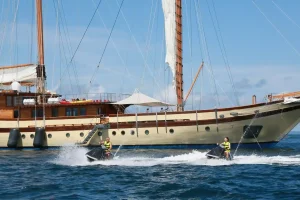
- Traditional phinisi liveaboards (20–30+ m): usually part of a package berth/mooring agreement with the operator; daily equivalent often falls in the IDR 300,000–700,000 range when averaged into crew, water, and shore support.
Unmanaged anchoring in the outer bay is still used by some cruisers. You might not pay a “fee” as such, but expect:
- Dinghy landing charges at some jetties or beach clubs.
- Taxi-boat costs if you use a local shuttle rather than your tender.
- Harbour police or port authority visits to check paperwork, especially in peak season.
Liveaboard charter operators generally factor home‑port mooring or dockage into their Komodo package pricing. If you’re planning to base a new vessel in 2026, contact our Labuan Bajo Marinas team for projected seasonal mooring availability and cost bands – these can shift slightly year to year as fleets grow.
4. Superyachts and Phinisi Charter Base Pricing
Labuan Bajo is an established starting point for high-end phinisi and superyacht charters into Komodo National Park and the Flores Sea. The infrastructure is more compact than Bali, but able to accommodate 30–60 m vessels with the right planning.
Berthing and Lay-By for 30–60 m
- 30–40 m LOA: budget IDR 7–12 million per night for a secure along‑side or stern‑to position, depending on depth, fendering, and support boats required.
- 40–60 m: IDR 10–20 million per night is a more realistic band, with the higher end reflecting peak season, high‑amp shore power, and extra security.
- Anchored off with shore support: some captains choose to anchor outside and pay lower daily shore‑side support fees instead of full marina pricing. Plan for IDR 3–8 million/day for tender shuttle, security, garbage, and provisioning support, based on scope.
Phinisi charter vessels often operate on annual agreements including:
- Home berth or priority mooring inside the main harbour zone.
- Lay‑by pricing during maintenance months when the boat is idle.
- Preferential fuelling and provisioning windows at the quay.
If you are operating above 30 m LOA, communicate your dimensions, bollard pull, power draw, and turning circle well ahead of arrival. Crews familiar with Komodo National Park know that wind-against-tide conditions in the straits and gusts in the bay can make manoeuvring challenging for large vessels without tug or RIB assist.
5. Fuel, Water, Provisioning, and Park Fees: The Real Operating Costs
Berth rates are only one component of labuan bajo marinas cost and pricing. For an accurate budget, you must layer in fuel, fresh water, ship’s stores, and the Komodo National Park fee structure.
Fuel and Water
- Marine diesel: Indonesia maintains subsidised and non‑subsidised fuel regimes. Visiting yachts and commercial operators generally pay non‑subsidised prices. As a planning number, assume diesel in the IDR 15,000–20,000/litre bracket by 2026, subject to global markets.
- Water: potable water is delivered either via shore hose or barge in some cases. Budget IDR 50,000–100,000 per 1,000 litres for basic supply, more if you require filtration or dedicated delivery runs.
- Handling fees: tanks on larger yachts and phinisi may incur separate hose, filter, or berthing surcharges during refuelling.
Provisioning and Logistics
- Local markets: fresh fish, vegetables, and fruit are relatively affordable. A week’s local provisioning for a 4‑6 crew monohull might sit in the IDR 2–4 million range with careful shopping.
- Imported goods and premium wine/spirits: significantly higher; many superyachts ship specialised items in via Bali or Jakarta.
- Agency services: for larger yachts and charters, allow for an agency margin of 10–20% on complex provisioning, cold chain, and just‑in‑time deliveries.
Komodo National Park Fees
The fee structure for Komodo National Park has seen several revisions. By 2026, you should still expect to pay conservation and activity fees per guest and per vessel day when operating inside the park boundaries. The latest official outline is usually maintained via Indonesia Travel and regional park authority channels. For operational planning, many charter operators now bundle park fees directly into their cruise tariff to simplify accounting.
6. Clearance, CAIT Permits, and Formalities for Komodo and Flores Sea
Indonesia’s cruising regulations have gradually simplified, but you still need to factor in clearance and permit costs alongside labuan bajo marinas cost and pricing.
- Initial entry: most foreign yachts first clear at recognised international ports (e.g. Sabang, Batam, Jakarta, Bali). By the time you reach Labuan Bajo, you should already hold a valid cruising permit.
- Cruising permit (CAIT equivalent / YC or e-clearance systems): these processes have moved online and via agents. Fees vary by tonnage and duration; plan for several million rupiah in paperwork and service charges for multi‑month itineraries across the archipelago.
- Port clearance in Labuan Bajo: harbour master (Syahbandar), quarantine, and immigration checks may be required depending on your movement (domestic vs international leg). Agents generally charge a flat facilitation fee that might sit in the IDR 2–6 million range for a typical visiting yacht, more for complex superyacht movements.
Most superyachts and commercial liveaboards rely on an agent or on‑the‑ground coordinator. It reduces time at the harbour office, ensures accurate manifests for Komodo National Park entries, and helps align your marina booking with the legal side of your call.
7. Seasons, Weather Windows, and How Pricing Shifts Through the Year
Sailing seasons in the Flores Sea directly influence Labuan Bajo marinas cost and pricing. Demand, especially from liveaboards and charter vessels, peaks when conditions are most favourable around Komodo.
Seasonality Overview
- Dry season (roughly May–October): Southeast trade winds dominate. Seas are generally moderate, visibility underwater is good, and this is prime Komodo charter season. Expect:
- Higher berth and mooring occupancy.
- Limited last‑minute space for larger vessels in July–August.
- Prices toward the upper end of the ranges quoted above.
- Shoulder months (April, November): transitional winds, some rain, but still workable. You can sometimes negotiate better medium‑term rates for lay‑by or staging before or after high season.
- Wet season (December–March): more squalls, reduced visibility, occasional strong westerly swell and weather systems in the wider Flores Sea. Some liveaboards reposition; marina occupancy eases and negotiability improves, although specific facilities may also undergo maintenance.
For 2026, I expect continued gradual rate increases aligned with Indonesian wage and fuel trends. The most cost‑effective strategy is to lock in your seasonal marina or mooring arrangement early, particularly if you intend to base a charter or liveaboard vessel in Labuan Bajo for more than eight weeks.
Plan Your 2026 Komodo Base With Local Numbers, Not Guesswork
Labuan Bajo offers a practical balance of marina berths, serviced moorings, and anchorage support for yachts heading into Komodo National Park and the Flores Sea. The key to controlling your budget is understanding how labuan bajo marinas cost and pricing behaves by LOA, season, and service package – then fixing your slot and support team before you sail.
If you want current 2026 rate cards, tailored estimates by vessel size, or assistance coordinating berths, moorings, fuel, and permits, contact our Labuan Bajo Marinas team via WhatsApp at +62 811-3941-4563 or email bd@juaraholding.com and we’ll help you build a realistic Komodo and Flores Sea budget line by line.