When yacht captains ask me for a practical labuan bajo waterfront marina area guide, they rarely want marketing copy. They want to know exactly where to bring a 45-foot monohull for fuel at 08:00, where the phinisi charters load guests, and how far the supermarket is from the tender dock. This article is written for that kind of planning.
I walk the waterfront and run it by boat several times a week. The seafront keeps evolving, but the core layout of commercial harbor, charter jetties, fuel access, and new marina infrastructure is now relatively stable. I will keep this guide aligned with 2026 sailing seasons and the way Komodo charter and liveaboard operations are actually working on the water.
1. Big-picture layout of the Labuan Bajo waterfront
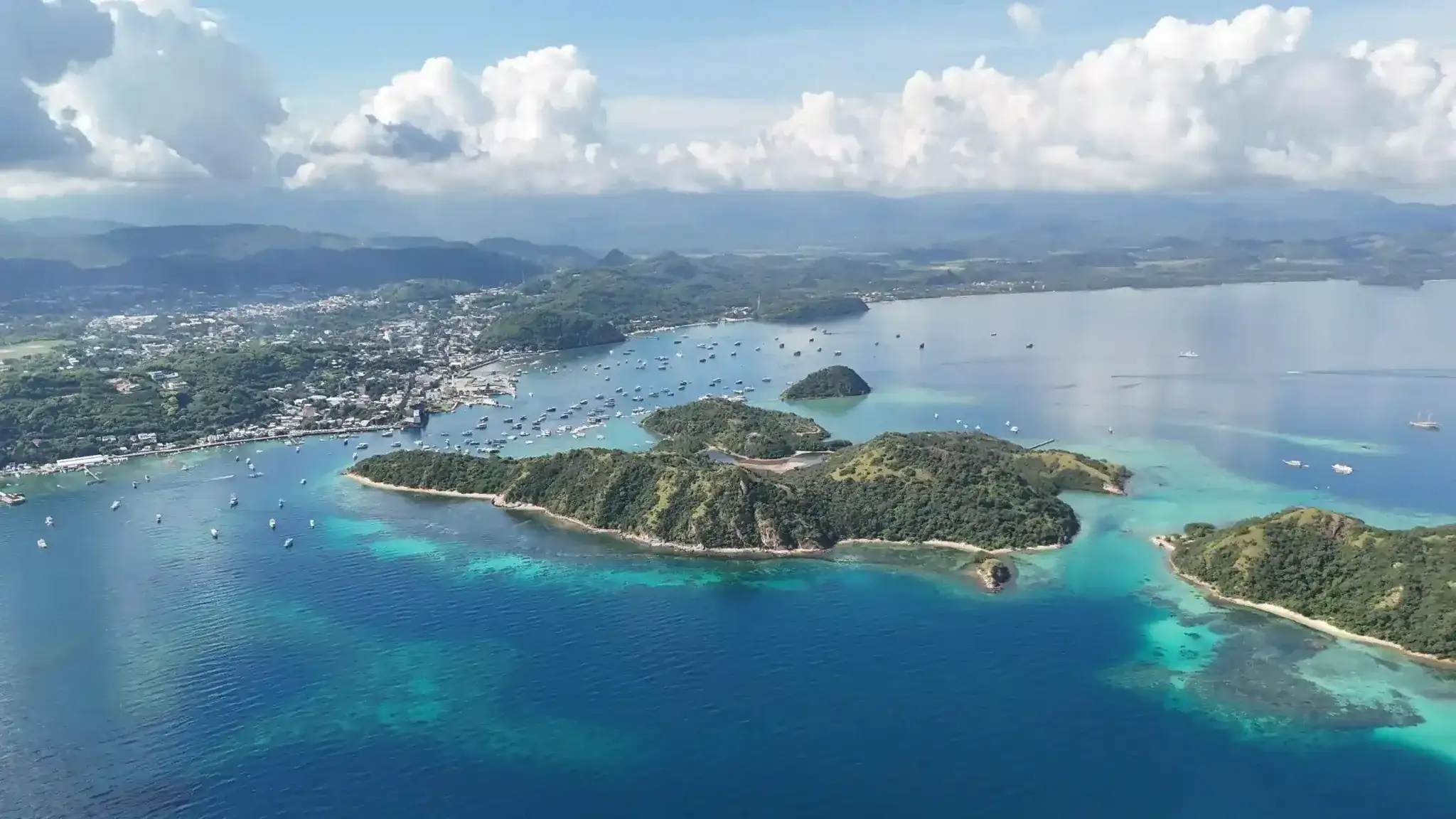
The town stretches along a single north-facing bay on the west coast of Flores. From west to east along the waterfront you have, in broad strokes:
- The tourism/charter strip and hotel jetties along Jalan Soekarno Hatta
- The main commercial port and public piers near Pelabuhan Rakyat
- Marina-style piers and yacht-oriented facilities on the more sheltered eastern side
- Outer mooring fields and anchorages extending into the Komodo National Park approaches
If you zoom in on satellite imagery and then compare with this labuan bajo waterfront marina area guide, you will see three main functional zones for yacht and liveaboard activity:
- Townside charter jetties – short piers for phinisi and dayboats loading guests
- Working harbor and fuel wharves – cargo ships, ferries, fuel barges, bunkering
- Yacht and superyacht zone – deeper water, better swing room, marina-style berths and moorings
Labuan Bajo Marinas sits in this third zone, forming the core of dedicated yacht infrastructure in the bay.
2. Main piers and what they are used for
For planning, I break the waterfront into identifiable pier clusters. Names on the ground can vary, so I reference what captains actually call them when coordinating tenders and pilotage.
2.1 Western tourism strip jetties
Along the western side of town, close to the main restaurant strip on Jalan Soekarno Hatta, you find several short jetties used for small-boat charter departures and hotel transfers.
- Hotel and dive jetties – short, often T-head structures for resort boats and dive dayboats. Depths are modest (2–4 m at MLW), with tidal range of around 2–2.5 m on springs.
- Daytrip charter pick-up – wooden phinisi and fiberglass speedboats taking up to 20–40 guests out to Padar, Pink Beach, or Manta Point. These jetties get very busy 07:00–09:00.
These are convenient for guests, less useful for yachts. Side-tie room is limited, surge from passing traffic is constant, and there is little vehicle access for major provisioning runs. I treat them as tender pick-up points only.
2.2 Central commercial harbor and public pier
Move a few hundred meters east and the harbor gets heavier. You reach the main public ferry and cargo piers, served by inter-island vessels and local wooden freighters.
- Ferry wharf – RoRo ferries to Sape, Sumbawa, and occasionally Maumere. Avoid bringing yachts alongside here; schedules and maneuvering windows change fast.
- Public pier – used by local wooden cargo vessels (kapal barang) and some phinisi. Depths typically 4–7 m but silt and wake from traffic makes it uncomfortable for yachts.
As part of any working labuan bajo waterfront marina area guide, I mark this section as “commercial first.” Superyacht tenders occasionally pop in to collect officials, but larger yachts generally stay clear except by prior arrangement for clearance or special bunkering setups.
2.3 Eastern yacht and charter piers
Further east is where infrastructure has been trending toward yacht and superyacht support. Here you see phased development of marina-style piers, dedicated charter docks, and improved landside access.
Labuan Bajo Marinas is centered in this zone, with planned and existing pier infrastructure to handle visiting private yachts, charter fleets, and larger liveaboards. Berth configuration and exact layout keep evolving, but the intent is clear: more predictable depths, fender-friendly quays, and direct access to fuel, water, and shore services.
3. Fuel docks, bunkering options, and water
Fuel is one of the first questions any captain asks. In Labuan Bajo, you have a mix of formal and semi-formal solutions, depending on vessel size and range requirements.
3.1 Fuel for yachts up to ~25 m
For smaller yachts and liveaboards, I generally see three working patterns:
- Dockside diesel at yacht-friendly pier – arranged in advance through operators such as Labuan Bajo Marinas. Expect fuel-by-hose direct to deck, often from shore tanks or dedicated fuel pontoons.
- Barrel or IBC fuel delivery – widely used for charter phinisi. 200-liter drums or IBC totes are craned or pumped on board. Quality control relies on your supplier and your filtration regime.
- Small-boat jerrycan shuttles – workable for yachts using 200–600 liters at a time. Fuel purchased landside and shuttled by tender, then run through a Baja filter.
Water is generally available dockside in the eastern yacht zone. I always recommend testing for taste and chlorine; many of the larger charter vessels now use dual-stage filtration plus UV, even for marina water.
3.2 Bunkering for superyachts and larger liveaboards
For yachts consuming several tens of thousands of liters, operations resemble a mini-bunkering campaign:
- Coordination several days ahead with agents and Labuan Bajo Marinas
- Fuel barge or truck-and-hose setup at a controlled pier, often away from peak charter traffic
- Comprehensive sampling and filtration; most captains run fuel through onboard separators and keep log records for each batch
Draft limits and turning room matter. Deeper-draft vessels (4–5 m) usually stay in the outer harbor and receive fuel via barge or truck hose extension, to avoid tight inner-harbor maneuvering.
4. Liveaboard and charter departure points
The Komodo region is now one of Indonesia’s major liveaboard hubs, on a similar level of traffic to Raja Ampat. You can cross-check the growth trend against national tourism data at Indonesia Travel.
4.1 Phinisi charter docks
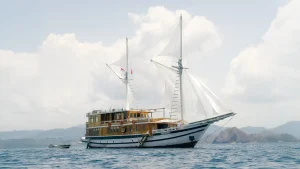
Traditional wooden phinisi and steel liveaboards (20–50 m LOA) typically use:
- Eastern charter piers – where guests embark, luggage is handled, and provisions are loaded. Depths around 5–8 m, with tidal current that is manageable if berthing is planned for neaps or slack.
- Townside short jetties – still popular for budget or daytrip boats, but congestion and limited truck access make them less practical for large weekly-turnaround vessels.
Most liveaboards position themselves on moorings or anchorages overnight and come alongside only for guest changeover, fuel, and major provisioning.
4.2 Superyacht tender and guest transfer points
Superyachts typically avoid lying alongside for long periods due to wake, local traffic, and privacy concerns. Instead, they anchor out in 20–35 m with good mud and sand holding, then send guests and crew in by tender to:
- Designated marina or charter piers in the eastern waterfront zone
- Occasional hotel jetties, coordinated with property management and local agent
This flexible tender-based approach also keeps the mothership a short sail away from the core dive sites in Komodo National Park, reducing commute time for early-morning dives or sunrise hikes.
5. Moorings, anchorages, and Komodo approach
A functional labuan bajo waterfront marina area guide must go beyond the seawall. Most yacht activity that feels “comfortable” happens on the moorings and anchorages just outside the town harbor itself.
5.1 Inner-bay moorings
You will see fields of locally-laid moorings used by phinisi fleets. Some are properly engineered, some are heritage DIY projects. I never assume a mooring is safe without:
- Direct confirmation from the operator or marina
- Visual inspection of lines and hardware at low tide
- A conservative safety margin on expected wind and load
Private or marina-managed moorings in the eastern part of the bay are usually the best option for yachts wanting to stay close to town while limiting anchor damage on seagrass or coral patches.
5.2 Preferred yacht anchorages near Labuan Bajo
Depths in the bay range from single digits near shore to 40+ m in the approaches. Yachts commonly anchor:
- North and northwest of the main harbor – 15–30 m, mud and sand, outside heavy traffic lanes
- On the edges of local mooring fields – giving swing room and avoiding entanglement with lines
Always cross-check charts and satellite for coral heads. Currents are generally less aggressive than inside narrow Komodo passes, but strong squalls occasionally sweep down from Flores’ highlands. Holding is reasonable, but I recommend a generous scope, especially during transitional monsoon periods.
Once beyond the bay, Komodo National Park anchorages come into play: Gili Lawa, Siaba, Sebayur, and many more. For high-level context on the region’s geography and currents, the Flores Sea entry is a useful starting point.
6. Provisioning, clearance, and CAIT-style permits
This is where townside logistics intersect with the waterfront. Boats do not just need a pier; they need food, parts, and paperwork.
6.1 Provisioning close to the waterfront
Within 500–800 m of the main eastern charter piers you have:
- Supermarkets and minimarts – decent dry goods, basic dairy, limited imported items
- Traditional markets – fresh vegetables, fruit, and fish; best to shop early morning for quality
- Ice suppliers – block ice widely used by fishing boats; flake ice is more variable
Larger liveaboards and superyachts typically work with provisioning coordinators to pre-order bulk goods, then use trucks to bring pallets directly to the appropriate pier. The dedicated shore access around guide projects and marina-related developments makes this smoother than trying to use small hotel jetties.
6.2 Clearance and permits
Indonesia’s yacht clearance framework continues to modernize, and older references to “CAIT” (Cruising Application for Indonesian Territory) are increasingly historical. Still, the basic principles remain:
- International clearance – typically handled at designated ports of entry before or after your Komodo stop, using Indonesia’s yacht clearance systems and agents.
- Local harbor procedures – reporting line-ups for liveaboards and charter vessels operating out of Labuan Bajo, including manifest submissions and regular safety checks.
- Komodo National Park permits – tickets and park-entry documentation for guests, crew, and vessels; managed on a per-day or per-package basis.
Regulations can shift year to year. By 2026 I expect further digitization and centralization, but local implementation always carries its own rhythm. Using an agent or marina-based liaison remains the most time-efficient option, especially for foreign-flag yachts and larger charter fleets.
7. Sailing seasons, weather windows, and practical timelines for 2026
Planning Komodo and Flores Sea itineraries around seasons is as important as knowing where the fuel dock is. Wind, visibility, and swell patterns will directly influence how pleasant that approach into Labuan Bajo feels.
7.1 Broad seasonal pattern
- Dry southeast monsoon (approx May–September) – ESE to SE winds, generally moderate; better underwater visibility, cooler evenings. Labuan Bajo and Komodo are busiest during this window.
- Transition periods (March–April and October–early December) – lighter and more variable winds; some of the calmest sea states but with higher humidity and sporadic squalls.
- Wet northwest monsoon (approx December–February) – more rain, more thunderstorms, occasional stronger northwest wind events and rougher crossings from Bali/Lombok direction.
7.2 Weather windows for approaches and departures
For yachts and liveaboards repositioning in and out of Labuan Bajo during 2026, I generally suggest:
- Bali/Lombok – Labuan Bajo – choose a 2–3 day window with stable forecasts, avoiding strong westerly pulses in the wet season. Many yachts overnight near Moyo or Satonda before crossing north of Sumbawa.
- Maumere – Labuan Bajo – east–west transits benefit from the relatively sheltered north coast of Flores; still watch out for localized squalls and head seas during strong monsoon phases.
- Within Komodo National Park – tidal currents in narrow passes can run 3–6 knots. Time transits around slack water, not just wind forecasts.
On approach to the harbor itself, visibility is usually good, but traffic is dense: fishing boats without AIS, slow liveaboards, and high-speed dive boats cutting across at angles. I prefer day arrivals, with a last light margin for picking up a mooring or laying anchor.
Plan your waterfront operations with local support
A precise labuan bajo waterfront marina area guide is useless if it does not connect with real support on the ground. Piers shift, moorings get serviced, fuel suppliers upgrade systems, and clearance rules evolve with new regulations.
If you are planning a Komodo charter base, a 2026 superyacht season, or a one-off Flores Sea expedition and want up-to-date details on piers, fuel docks, and departure points, contact our team for current charts, berthing options, and operational support via WhatsApp at +62 811-3941-4563 or email bd@juaraholding.com.