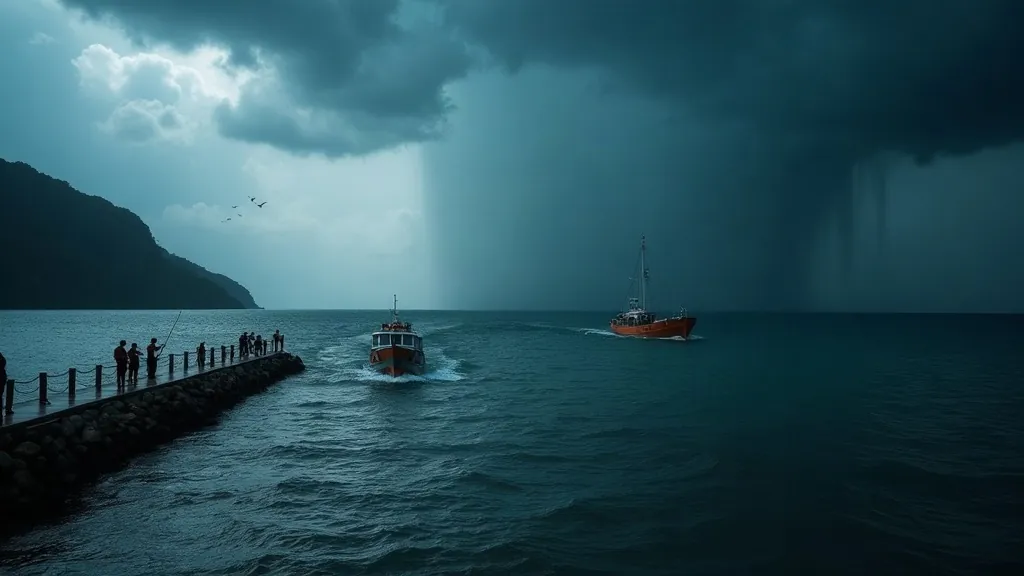
The Weather Problem, Precisely Stated
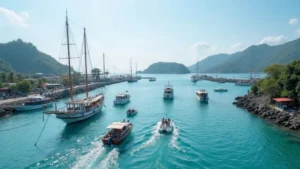
Good storm protocol starts with an honest threat model. Labuan Bajo does not do cyclones — Flores lies close enough to the equator that rotating storms form well away from it, and the harbour’s hills give the bay real shelter from most directions. What the harbour does, mainly in the December–March northwest monsoon, is the squall: a fast-moving front that turns a grey afternoon into 25–40 knots of wind and blinding rain in minutes, blows hard for twenty minutes to a few hours, and leaves. The damage pattern is correspondingly specific — chafed pendants, dragged undersized moorings, dinghies flipped at landings, awnings gone — and almost all of it is preventable with fifteen minutes of warning used well. The fleet’s protocols are built around exactly those fifteen minutes.
Reading the Sky and the Screen
Warning comes from two sources, and good crews use both. The sky first: squalls announce themselves as a hard-edged dark line on the northwest horizon, often with a visible rain curtain beneath and a cool outflow gust ahead of it — the traditional signals every Indonesian captain in the harbour reads fluently. The screen second: regional radar and satellite apps let a watchkeeper track cells forty minutes out, and forecast models flag the unstable afternoons when squall risk climbs. The protocol is a standing weather eye during monsoon months: someone glances at horizon and app every half hour, and the words ‘line to the northwest’ start the checklist without discussion. Fifteen to thirty minutes of warning is normal; the crews caught out are almost always the ones who were not looking.
Preparing the Boat: Dock and Mooring Versions
Alongside, the checklist is about lines and windage: doubled bow and stern lines, springs checked and chafe-protected, fenders repositioned for the expected push, awnings and covers stripped or lashed, loose deck gear below, and the boat’s motion watched against neighbours as the front hits — pier positions that suit calm weather sometimes need a fender board when a squall stacks boats onto the dock. On a mooring, the version is the one our wet-season guide builds in full: trusted inspected tackle, doubled pendants sleeved against chafe, bow pointed fair, and — the fleet’s real insurance — a crew member aboard with the engine warm, because a mooring that drags with someone at the helm is an anecdote, and the same drag on an empty boat is a claim. Tenders get hauled, drained, or double-secured at the first warning; flipped dinghies are the squall’s favourite easy trophy.
The fifteen-minute squall checklist:
- Confirm: hard line on the northwest horizon or radar cell inbound.
- Alongside: double lines, chafe gear, fenders repositioned, windage stripped.
- Mooring: pendants checked, bow fair, crew aboard, engine warm.
- Tenders hauled, drained, or double-secured; deck gear below.
- Web activated: neighbours called, office informed, VHF monitored.
The Harbour’s Communication Web
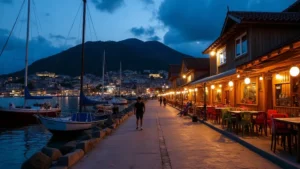
Labuan Bajo’s most effective storm instrument is social: a harbour-wide web of WhatsApp threads, VHF calls, and shouted warnings that moves faster than any official channel. When the line appears on the horizon, the mooring field lights up — neighbouring crews wake each other, the day office phones boats with exposed positions, agents message their fleets, and within minutes every occupied vessel is working its checklist. Visiting crews should plug in on arrival: numbers exchanged with the office and both neighbours, VHF monitored, and the local threads joined where invited — the same neighbourhood logic that runs the harbour’s security culture runs its weather culture. In a squall economy, being known is a safety system; the boat nobody thinks to call is the boat that finds out from the wind.
Riding It Out and the After-Action
When the front arrives, the protocol simplifies: crew aboard and clipped on if working the deck, engine running on moorings under strain, lines tended not admired — a surging spring eased or a chafe point re-sleeved mid-blow saves the fitting — and the tender traffic stops until it passes, per the night-and-weather discipline in our waterfront etiquette guide. Then the after-action, which the disciplined fleet treats as compulsory: walk the boat — lines, pendants, fittings, bilges, chafe gear; walk the neighbourhood — check the boats beside you, especially unattended ones, and report what you find; and log what the squall taught — the fender that was wrong, the awning that nearly went. Squalls are the harbour’s recurring exam, and each one’s lessons are next month’s preparation. Boats that treat them that way sail through entire monsoon seasons with nothing to report — which is the whole point of protocol.
For boats that would rather not test a protocol at all, hauling out to dry storage before the season peaks remains the conservative option.
Frequently Asked Questions
Does Labuan Bajo get cyclones?
No – Flores sits close enough to the equator that rotating storms form well away. The harbour’s weather problem is the fast squall front, mainly December-March, with 25-40 knot gusts for minutes to hours.
How much warning does a squall give?
Typically 15-30 minutes: a hard dark line on the northwest horizon, a cool outflow gust, and a radar cell on the apps. A standing weather eye during monsoon months converts that window into a completed checklist.
What is the most common squall damage?
Chafe: pendants and dock lines worked through at unprotected contact points, plus flipped tenders and lost awnings. Doubled, sleeved lines and stripped windage prevent nearly all of it.
Should crew stay aboard during a blow?
On moorings under strain, yes – a crew member with the engine warm turns a dragging mooring into a non-event. Alongside, crews tend lines through the blow rather than watching from the pier.
Squalls reward the fifteen minutes before them and forgive almost nothing after. For mooring and berth arrangements with storm-tested tackle and positions, consult the berthing enquiry desk, or the team on WhatsApp at +62 811-3941-4563 or bd@juaraholding.com.