A Harbour That Moves by Small Boat
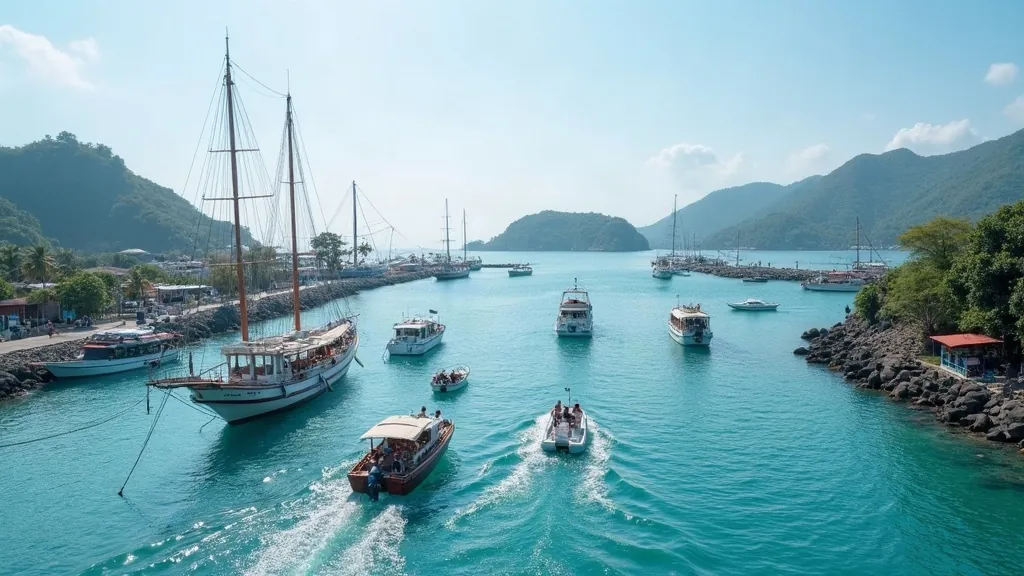
Watch the Labuan Bajo waterfront for an hour at 07:00 and you will count more small-boat movements than most marinas see in a day: charter tenders running guests, dive boats loading tanks, water taxis crossing the bay, supply skiffs stacked with produce, and crew dinghies threading it all. Much of the fleet lies on moorings and anchorage rather than alongside, so nearly everything — people, food, fuel, garbage — moves across open water. That density is why etiquette here is not politeness but traffic engineering: with no marked channels inside the mooring field, the fleet’s shared habits are the only thing separating a busy morning from a chaotic one. We document those habits as independent observers so visiting crews can join the rhythm on day one instead of learning it by collision of tempers.
Speed and Wake: the First Law
Inside the mooring field and within reach of any landing, the rule is dead slow, no wake — and it is enforced socially with remarkable efficiency. A wake through the moorings rolls cockpit breakfasts aboard thirty phinisi, slops a fuel barge mid-transfer, and swamps the gunwale-deep produce skiff that feeds half the fleet; the crews watching all remember the boat that did it. Plane only in open water beyond the fleet, throttle down early on approach, and cross other boats’ sterns rather than bows. The same discipline protects your own operation: a tender that arrives without wake can come alongside a laden supply boat or a guest gangway without adding motion to the transfer — which, in a harbour that moves everything by small boat, is the whole game.
Right of Way, Working Boats First
The formal rules of the road apply, but the waterfront’s working code adds a layer: give way to the boat doing the harder job. A laden supply skiff with ten centimetres of freeboard holds course; you manoeuvre. A dive boat recovering divers flies its flag and gets a wide, slow berth. A fuel barge manoeuvring alongside a phinisi owns the water around it until the lines are fast — wake discipline near bunkering operations is a safety matter, as our bunkering guide makes plain. Ferries and larger commercial traffic get the fairway without argument. None of this is written on a chart; all of it is watched, and visiting tenders that show they know it are extended the same courtesies within days.
Tender briefing card for new crew:
- Dead slow, no wake inside the mooring field and near all landings.
- Give way to laden supply boats, dive operations, and manoeuvring barges.
- Landings are for loading only – park off the float, stage passengers ashore.
- Night runs: full navigation lights, reduced speed, lookout for unlit craft.
- Cross sterns not bows; throttle down early on every approach.
Landings: Load, Leave, Repeat
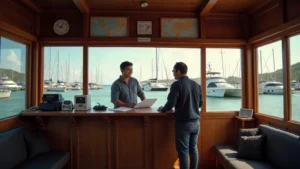
Dinghy and tender landings are the waterfront’s scarcest resource at peak hours, and the etiquette is ruthless about turnover: come alongside, load or unload, and clear the space — parking happens off the landing, on long painters or at your mother ship. Stage guests and cargo ashore before the tender arrives so contact time stays short; brief guests to board quickly and sit down; and at the busiest morning window, coordinate with neighbouring boats so three tenders are not fighting for one float at 06:45. The full small-boat logistics picture — which landings suit which operations, and how crew access works around the tide — is mapped in our dinghy dock guide; the etiquette summary is one line: the landing is a bus stop, not a car park.
Night Running and the Season’s Peak
After dark the waterfront keeps moving — guest transfers from sunset cruises, crew returning from town — and the etiquette tightens: proper navigation lights (a phone torch is not one), slower speeds than daytime, a lookout for unlit local craft and mooring pendants, and quiet past sleeping boats, because sound carries over water in ways engine-room crews forget. In July and August, when the fleet swells and every rule is under load, the harbour’s civility is genuinely tested — and the boats that keep it are the ones whose crews were briefed before their first run, not corrected after it. Put waterfront etiquette in your crew induction alongside safety drills; our berthing checklist treats it as standard arrival preparation, which in this harbour it is.
Frequently Asked Questions
Is there a speed limit inside Labuan Bajo harbour?
The fleet’s working rule is dead slow, no wake anywhere inside the mooring field and near landings – socially enforced and near-universal. Planing speeds belong beyond the fleet in open water.
Who has right of way among small boats?
Formal rules apply, plus the working code: the boat with the harder job holds course. Laden supply skiffs, dive-flag operations, and manoeuvring fuel barges get room; tenders manoeuvre around them.
Can tenders run at night?
Yes, and they constantly do – with proper navigation lights, slower speeds, and a bow lookout for unlit local craft and mooring gear. Quiet operation past sleeping boats is part of the code.
Why does wake discipline matter so much here?
Because the harbour moves everything by small boat: a wake rolls breakfasts across thirty phinisi, destabilises fuel transfers, and swamps low-freeboard supply skiffs. Wake-makers are remembered fleet-wide.
The waterfront’s civility is infrastructure – free to use and maintained by every crew that respects it. For berthing arrangements that suit your tender operations and landing access, ask the berthing enquiry desk, or the team on WhatsApp at +62 811-3941-4563 or bd@juaraholding.com.