The Waterfront’s Front Doors
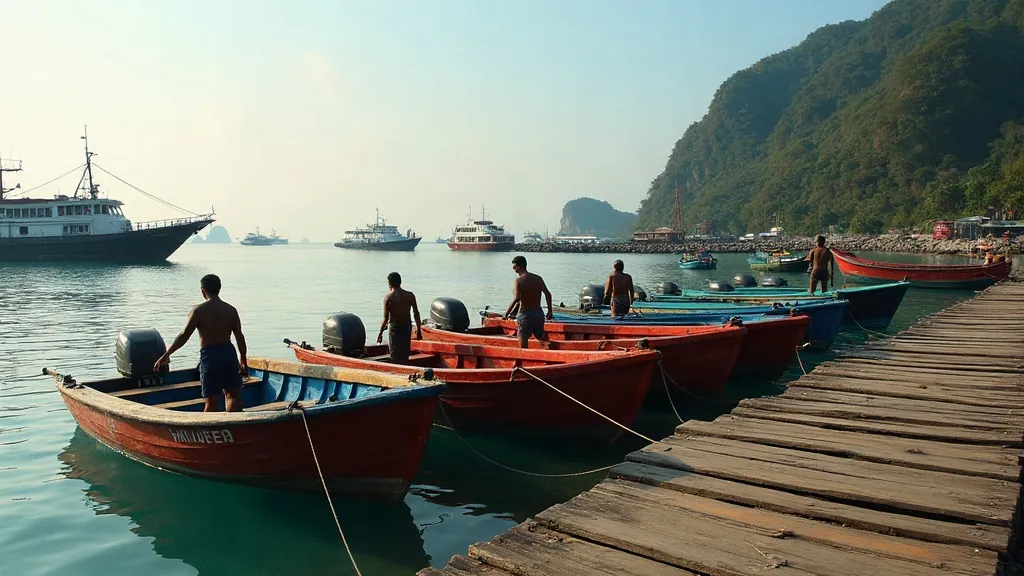
For the majority of the Labuan Bajo fleet lying on moorings and anchorage, the dinghy landing is the front door to everything: crew phones and coffees, guest transfers, market runs, agent meetings, spare parts. The town waterfront offers a working set of these doors — floats and steps at the main piers, landings serving the marina areas, and informal beach-and-steps options used by locals — each with its own depth, surge behaviour, and busy hours. None of them is large, which is why access here is a logistics skill: the crews that move smoothly know which landing suits which errand, at which tide, at which hour. We map the patterns as independent observers of the harbour’s daily rhythm; specific landing arrangements evolve with waterfront construction, so treat this as the operating logic rather than a fixed chart.
Choosing a Landing by Errand
The skill is matching door to errand. Guest transfers want the most presentable, most protected float with vehicle access above it — luggage and first impressions do not mix with a surge-washed ladder. Provisioning runs want the landing nearest the market and truck access, at the quietest hour you can manage, with porters available — the loading rhythm described in our provisioning guide. Crew liberty runs simply want somewhere secure to leave the dinghy for hours, which prioritises lighting and lock points over convenience. Fuel-jerry runs and garbage-out runs suit working piers over guest-facing floats. Nothing enforces these distinctions except sense and courtesy — but use the guest float for a garbage run at 07:00 and the waterfront notices.
Tide, Surge, and the Physics of Small Docks
Labuan Bajo’s tidal range is modest but real, and it changes the landings through the day: steps that are a stride at high water become a climb at springs low, floats sit differently against their piles, and the wet-season northwest swell puts surge into the more exposed landings that can pin or chafe a dinghy left carelessly. The habits that survive all of it: fender the dinghy as if the dock will test it (it will), tie with a painter long enough to ride the range, never leave the boat where surge can work it under a structure, and step ashore with the phone and wallet in a dry bag because sooner or later everyone misjudges one transfer. Crews running night operations add the etiquette layer covered in our tender traffic guide: lights on, slow in, quiet past sleeping boats.
Dinghy-run habits that keep access smooth:
- Match landing to errand: guest float, market landing, working pier, liberty dock.
- Painter long enough for the tidal range; fenders rigged; surge exposure checked.
- Outboard locked to transom, dinghy chained ashore, nothing loose aboard.
- Heavy runs outside the 06:00-08:00 fleet rush; landings never blocked.
- Night runs: lit landings, lights on, boat informed of return time.
Securing the Dinghy Ashore
The dinghy ashore is the fleet’s most exposed asset, and the security rules are absolute because the loss statistics are consistent: outboards and unlocked dinghies are what goes missing in Eastern Indonesian harbours, almost never anything else. Lock the outboard to the transom, chain the dinghy to a dock structure through a hard point, lift and lock the fuel line or take the kill cord, and leave nothing loose aboard — not the good torch, not the dry bag. At night add: lit landing only, and if the run home is late, tell the boat. All of it is thirty seconds of routine, and it is the difference between the harbour’s excellent overall record and its short list of preventable losses — the fuller layered picture is in our marina security guide.
Crew Rhythms That Keep the System Working
Access here has a daily shape: the 06:00–08:00 rush when the whole fleet provisions at once, a midday lull, a guest-transfer pulse in the late afternoon, and an evening trickle of liberty runs. Fit your operation into that shape and everything is easy — heavy runs in the lull, guest movements planned around the pulse, and the landing never blocked at rush hour by a parked dinghy doing a two-hour errand. Boats basing here long-term go further: sharing runs with neighbouring vessels, standing porter arrangements, a crew WhatsApp thread for the mooring field’s daily logistics. The waterfront rewards boats that behave like residents rather than visitors — and for crews new to the harbour, one briefed morning watching the rhythm teaches more than any chart of the landings.
Frequently Asked Questions
Where do crews land dinghies in Labuan Bajo?
At floats and steps around the main piers and marina areas, plus informal landings locals use. Crews match the landing to the errand – guest floats for transfers, market-side landings for provisioning, working piers for fuel and garbage runs.
Is it safe to leave a dinghy ashore for a few hours?
Yes, locked: outboard chained to the transom, dinghy chained to a hard point, nothing loose aboard. Unlocked outboards are the region’s one consistent loss; locked ones are rarely touched.
Does tide affect the landings?
Noticeably – steps lengthen at low water and springs, and wet-season surge works dinghies left on short painters against exposed structures. Rig long painters and fender for contact.
When is the waterfront busiest for small boats?
06:00-08:00, when the fleet provisions simultaneously. Heavy errands run easiest in the midday lull; guest transfers cluster in the late afternoon.
Small-boat access is Labuan Bajo’s circulatory system – join its rhythm and the harbour works for you. For berth or mooring positions with the landing access your operation needs, ask the berthing enquiry desk, or the team on WhatsApp at +62 811-3941-4563 or bd@juaraholding.com.