Two Sets of Requirements, One File
Insurance for a vessel basing in Labuan Bajo is a two-way street. In one direction, marina offices and agents want evidence from you: a current certificate showing third-party liability cover valid in Indonesian waters, and for season agreements usually the policy’s named limits. In the other direction, your insurer wants conduct from you: a mooring or berth meeting stated standards, watch arrangements, and honest declarations about where the boat sits from December to March. Owners tend to manage the first direction and drift on the second — and it is the second that decides whether a claim pays. We write as independent consultants who see both sides of the file; nothing here replaces your broker’s advice, but it should sharpen the questions you ask them.
What the Harbour Side Expects
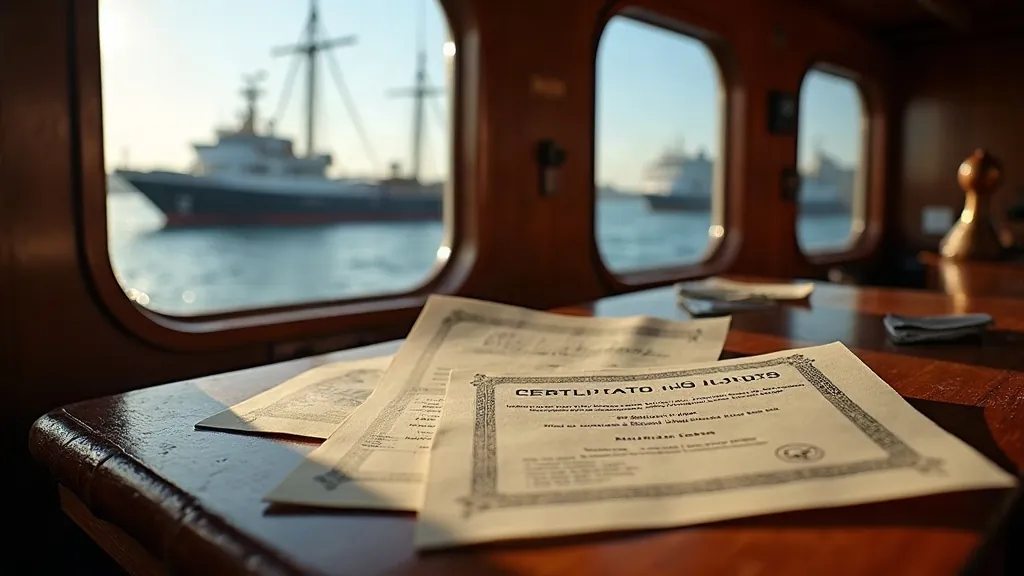
Third-party liability is the non-negotiable core: cover for damage your vessel does to piers, pontoons, neighbouring hulls, and persons, valid in Indonesian waters and current for the whole term. Season and annual berth agreements state minimums and commonly require the certificate before signature — align the two documents before signing, as our berth contract guide details. Beyond liability, offices increasingly ask wreck-removal cover for larger vessels — a 35-metre phinisi sunk at a pier is a harbour-scale problem — and charter operators must additionally hold the crew and passenger coverage Indonesian charter regulation requires. Keep copies aboard, with your agent, and in the office’s file; the certificate nobody can find is the season’s most avoidable delay.
What Your Insurer Expects Back
Read your own policy the way a claims assessor will. Cruising-area clauses must actually include Indonesian waters year-round — some policies write seasonal exclusions around monsoon months. Mooring and berthing warranties may require ‘professionally maintained’ moorings: an inspected mooring with documented ground tackle, as described in our wet-season guide, meets the spirit; an unknown buoy of convenience does not. Unattended-vessel clauses limit how long the boat may sit without a keeper. Security warranties may name measures — locked tenders, alarms — that must be in place for theft claims to pay, which is why the routines in our security guide are policy compliance as much as prudence. Every warranty you cannot honestly meet is a conversation to have with your broker now, not after a loss.
Season insurance file for a Labuan Bajo-based vessel:
- Third-party liability certificate, Indonesian waters, current for the full term.
- Hull policy schedule with mooring, security, and unattended-vessel warranties highlighted.
- Crew and passenger coverage evidence for charter operations.
- Mooring inspection record and named boat-keeper for the monsoon declaration.
- Broker contacts and renewal dates, diarised a month early.
The Monsoon Question
The wet season deserves its own paragraph in your policy review. Insurers distinguish between a vessel actively crewed through the northwest monsoon, a vessel laid up on a named, inspected mooring with a boat-keeper, and a vessel left unattended at anchor — premiums and validity differ across all three. Declare the arrangement accurately: where the boat lies December through March, who watches it, what ground tackle holds it. Owners who upgrade their lay-up to match policy language — documented mooring inspection, named keeper, weekly checks logged — often find the premium conversation improves too. The monsoon is Labuan Bajo’s claims season; it is also, handled properly, the strongest underwriting story you can tell.
Building the File Once, Using It All Season
The efficient owner assembles one insurance file at season start: liability certificate with Indonesian-waters wording, hull policy schedule with warranties highlighted, crew and passenger coverage for charter operations, surveyor’s report if the policy required one, mooring inspection record, and broker contact details. That file answers the marina office, the agent, the charterer’s questions, and — if the season goes wrong — the assessor, without a single scrambled email. Renewal dates go in the operations calendar with a month’s margin, because an expired certificate mid-season suspends more than paperwork: berth agreements commonly require continuous cover, and a lapse can put your allocation itself in question. One afternoon of assembly; a season of answered questions.
Insurers increasingly ask what happens when the sky darkens; the documented storm procedures at Labuan Bajo marinas are the evidence a claims assessor wants to see.
Frequently Asked Questions
What insurance do Labuan Bajo marinas require?
Evidence of third-party liability cover valid in Indonesian waters is the core requirement, with stated minimums in season agreements. Larger vessels are increasingly asked for wreck-removal cover; charter boats also need regulated crew and passenger coverage.
Does standard yacht insurance cover Indonesian waters?
Only if the cruising-area clause says so – some policies exclude monsoon months or cap time in the region. Verify the wording for year-round Indonesian waters before committing to a season berth.
What can invalidate a claim while berthed here?
Unmet warranties: an uninspected mooring, an unattended vessel beyond permitted periods, or absent named security measures. Match your actual routine to the policy language, or renegotiate the language.
How does the monsoon affect cover?
Insurers price and condition the December-March arrangement: crewed, keeper-attended lay-up on an inspected mooring, or unattended. Declare it accurately – a documented lay-up is both valid cover and a better premium story.
Insurance here is a file you build once and a set of habits you keep all season. For help aligning berth-agreement requirements with what your policy actually says, reach the berthing enquiry desk, or the team on WhatsApp at +62 811-3941-4563 or bd@juaraholding.com.