
What Actually Changes in Peak Season
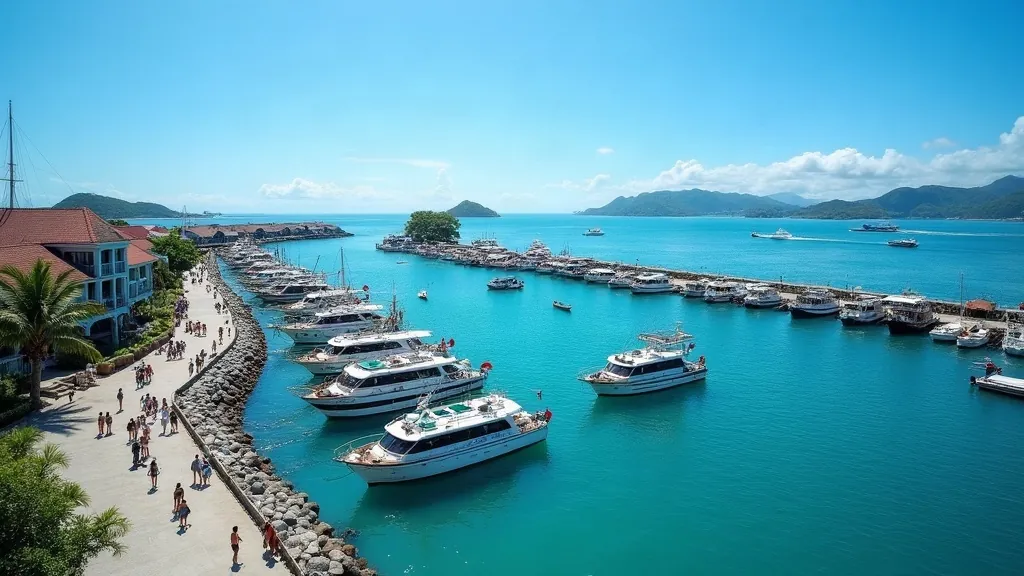
The Komodo gateway’s peak is compressed and intense: the July–August dry-season window brings the year’s densest charter calendar, and the harbour that felt roomy in February runs at effective capacity. The important nuance — and the one visiting captains most often misread — is that Labuan Bajo’s peak behaves as a scarcity market more than a surge-pricing market. Published structures hold: day berthing from $30, monthly terms in the $600–$3,000 band by length, moorings at $10–$20. What changes is availability — alongside space is committed to the turnaround fleet weeks in advance, and the marginal request meets ‘when’, not ‘how much’. This article is about operating inside that reality; for the year-round fee architecture itself, our pricing guide remains the reference document.
The Scarcity Mechanics
Follow the calendar and the mechanics are obvious. The charter phinisi that anchor the harbour’s economics run weekly turnarounds through the peak, and their standing agreements — signed months earlier — hold the alongside space on exactly the mornings everyone else wants it. Allocation priority runs on commitment, as our waitlist guide explains, so by the time July arrives the alongside calendar is largely a settled matter of standing bookings plus a thin margin the office juggles daily. Visiting yachts requesting alongside space mid-July are not being refused; they are being offered what genuinely remains: moorings, anchorage, and short alongside windows between turnarounds. Understanding this as calendar physics rather than gatekeeping is the first step to working it well.
What It Means for Your Budget
For budgeting, the peak’s message is reassuring on rates and demanding on planning. A vessel with a season agreement signed in the first quarter carries its negotiated terms through the peak untouched — which is precisely why the contract guide pushes owners to fix renewal terms in writing. A vessel arriving without arrangements should budget the mooring-plus-windows pattern: mooring as the season’s base cost, alongside windows for provisioning, fuel, and guest days booked ahead at day rates, and tender operating costs in between — the full arithmetic of that hybrid runs through our base-strategy comparison. Utilities and services follow their own peak logic: metered power and water prices hold, but delivery slots for fuel and provisions tighten, so the cost of arriving unplanned is paid in days waited rather than dollars added.
Peak-season playbook by arrival type:
- Season operators: agreement signed Q1, renewal terms fixed in writing.
- Returning vessels: alongside windows for known dates reserved by April.
- Visiting yachts: mooring or anchorage as base, windows booked via day office.
- All vessels: fuel and provisioning slots ordered days ahead, not mornings.
- Budget frame: rates hold – plan for availability, not surge pricing.
Booking Strategy: the Calendar Is the Price
In a scarcity market, timing is the negotiation. Season agreements for July–August berthing are realistically a first-quarter conversation; by April the alongside calendar has hardened, and by June requests join a genuine waitlist measured in weeks. Provisioning-day and turnaround windows can still be reserved closer in — the day office fits them between standing bookings — but ‘reserved’ is the operative word: the crews who book windows at 16:00 for the week ahead beat the crews negotiating at the pier head at 07:00. For owners planning multi-season programmes, the peak is also the argument for commitment: a twelve-month agreement priced across the whole year buys the July access that no amount of peak-week money can, and it is what the allocation system is designed to reward.
Reading the Peak as an Investor Signal
Step back from the operational scramble and July tells a strategic story: a harbour running at capacity, published rates holding without surge premiums, and demand absorbed by moorings and anchorage rather than lost. For owners weighing longer commitments — season agreements, engineered moorings, or the berth-linked investment structures described in our berth investment overview — the peak is the annual demonstration of why secured access has value here. Scarcity that repeats every year, visibly, at the gateway to a national park with capped vessel growth, is the kind of scarcity infrastructure investors underwrite. That is a larger topic; the peak-season point is simply that the two months when the harbour is hardest to use are also the months that explain why positions in it are worth holding.
Regional context matters when judging a quote — the Bali, Lombok and Labuan Bajo fee comparison shows where the Komodo gateway sits in the wider Indonesian market.
Frequently Asked Questions
Do berth prices in Labuan Bajo rise in July and August?
Published structures largely hold – from $30 daily, $600-$3,000 monthly, moorings $10-$20. The peak constraint is availability: alongside space commits to the charter fleet weeks ahead, so timing matters more than money.
Can a visiting yacht get alongside space in peak season?
Usually as short windows between charter turnarounds rather than standing berths – booked through the day office days ahead. The workable base is a mooring or anchorage with reserved alongside windows.
When should peak-season berthing be arranged?
Season agreements in the first quarter; specific July-August windows by April. From June, new alongside requests join a waitlist measured in weeks.
Is the anchorage a realistic peak-season fallback?
Yes – the designated anchorage remains free and the mooring field absorbs overflow every season. Pair it with booked alongside windows for provisioning, fuel, and guest days.
The peak rewards exactly one thing: decisions made early. To line up season terms or reserve July-August windows before the calendar hardens, contact the berthing enquiry desk, or the team on WhatsApp at +62 811-3941-4563 or bd@juaraholding.com.