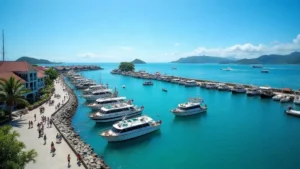
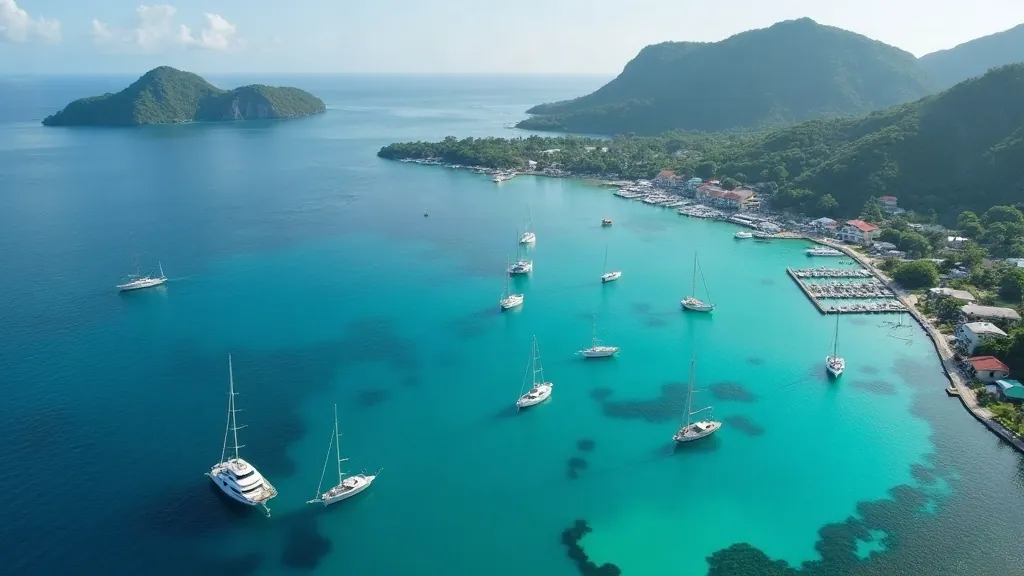
Two Base Strategies, One Harbour
Every operator running Komodo from Labuan Bajo eventually faces the same spreadsheet. Strategy one: base on the water — the designated anchorage is free, a maintained swing mooring runs $10–$20 per day — and accept that electricity, water, and every crate of provisions now involves a generator or a tender. Strategy two: pay for alongside space at $30 and up per day, or $600–$3,000 per month depending on length, and buy back shore power, hose water, one-gangway logistics, and faster turnarounds. Neither is universally right. As independent consultants we have watched identical boats choose opposite strategies and both be correct — because the answer depends on charter frequency, not preference.
The True Cost of the Hook
The anchorage’s headline price of zero is real, but it buys an operating pattern with its own invoice. Generator hours climb: refrigeration, charging, and evening hotel load can add several engine-room hours a day, and at charter-fleet consumption rates the monthly fuel line for anchored hotel load alone can rival a mid-range berth fee. Tender cycles multiply — guests, crew, provisions, water, waste, every movement is a boat trip with fuel, time, and weather exposure attached. Crew hours leak into logistics rather than boat care. And turnarounds stretch: what takes a berthed boat one morning takes an anchored boat a day of shuttling. None of this makes the hook wrong; it makes the hook a different cost structure, dominated by fuel and time instead of fees.
The True Value of the Berth
A berth converts those variable costs into one predictable line. Shore power at 230V/50Hz replaces most generator hours — the load logic is covered in our shore power guide — hose water replaces barge runs, trucks deliver to the pier head, and guests step aboard over a gangway with luggage wheels rolling. For a boat turning charters weekly, the compressed turnaround alone can be decisive: a morning saved every week is, over a season, additional charter days. Add the softer values — trades can reach the boat easily for maintenance, the vessel presents better to boarding guests, crew rest improves — and the berth fee starts to look like an operations budget, not rent.
Season-model inputs before choosing a base strategy:
- Charter turnarounds per month, and the revenue value of a saved turnaround day.
- Generator fuel per anchored day for hotel load, at current diesel prices.
- Tender fuel plus crew hours per anchored day for guests, provisions, and water.
- Quoted berth terms: daily $30-plus, monthly $600-$3,000 by length, utilities metered.
- Insurance positions on anchorage, mooring, and alongside berthing.
Where the Lines Cross
Run the numbers for your own boat honestly and a pattern emerges. High-frequency charter operations — weekly or twice-weekly turnarounds through June to September — usually justify alongside space whenever they can get it, which is why peak-season berths are scarce and why the waitlist works the way it does. Expedition and dive boats spending most nights inside the park, touching town twice a month, rarely recover a monthly berth fee and do better on a mooring plus planned alongside windows for provisioning and fuel days. Wet-season lay-ups tilt to moorings on price. Many of the smartest operators run a hybrid: mooring as home, short alongside windows booked around every turnaround — a pattern the cost guide prices out in detail.
Deciding for Your Operation
Build the comparison over a season, not a week: berth fees against generator fuel, tender fuel, crew logistics hours at a realistic rate, and the revenue value of faster turnarounds. Then add the judgement factors a spreadsheet misses — guest first impressions at boarding, crew fatigue across a long season, maintenance access, and how your insurer views each arrangement. Operators who do this exercise annually often change strategy as their charter calendar changes, and that is the correct behaviour: base strategy is a dial, not an identity. The harbour offers both settings; the discipline is re-running the numbers each season instead of defending last year’s choice.
Frequently Asked Questions
Which is more cost-effective for a Komodo charter boat: berth or anchorage?
Boats turning charters weekly usually recover berth fees through saved fuel, tender hours, and faster turnarounds. Boats mostly inside the park, visiting town twice a month, usually do better on a mooring with booked alongside windows.
What does the anchorage really cost if it is free?
Generator hours for hotel load, tender fuel, and crew logistics time. Over a busy month those variable costs can approach a mid-range monthly berth fee – the hook is a cost structure, not an absence of cost.
Can operators combine both strategies?
Yes, and many do: a maintained mooring as home base plus short alongside windows around each turnaround for power, water, provisioning, and boarding. It captures most berth benefits at a fraction of the fee.
Do berth costs change in the wet season?
December to March demand softens, moorings and monthly berths become easier to negotiate at the lower end of published ranges, and lay-up strategies tilt toward moorings on price.
The right base is arithmetic plus judgement, re-run every season. If it helps to price both scenarios against your actual charter calendar, share your vessel and schedule through the berthing enquiry desk, or talk to the team on WhatsApp at +62 811-3941-4563 or bd@juaraholding.com.