When skippers ask me about “Labuan Bajo marinas vs anchoring”, they are really asking one thing: where is the smartest, safest, and most efficient place to base a Komodo season in 2026?
I run through the same checklist every time — crew change logistics, Komodo National Park access, fuel and water, swell exposure, security, repair options, and costs spread across a three‑ to six‑month season. Labuan Bajo is changing fast, and what worked in 2019 is now outdated. Let’s walk through what matters for yacht owners, charter and liveaboard operators, and superyacht teams planning Flores Sea operations.
1. The Big Picture: How You’ll Actually Use Labuan Bajo
Think of Labuan Bajo as the Komodo turn‑around hub, not just a postcard town. It’s your:
- Home port for multi‑week Komodo charters and expeditions across the Flores Sea
- Clearance and permit touchpoint for Indonesian formalities
- Fuel, water, and provisioning base between liveaboard departures
- Crew change and guest flight connection via Komodo Airport (LBJ)
This is where the “Labuan Bajo marinas vs anchoring” decision shapes your entire operation. Base in a marina and you prioritise predictability, power, logistics, and guest experience dockside. Base on anchor (or moorings) and you prioritise cost control, privacy, and maneuvering flexibility — but you’ll trade away some convenience every single day.
To keep terminology straight:
- Formal marina: fixed or floating pontoons, metered shore power, fresh water, fuel arrangements, 24/7 security, direct land access.
- Mooring field: maintained moorings, usually closer to shore than open anchorage, dinghy access to town or a marina dock.
- Anchoring: your own ground tackle in the main bay or adjacent inlets.
2. Access to Komodo National Park: Time, Distance, and Tides
Most yachts using Labuan Bajo are headed daily or weekly into Komodo National Park — north to Sebayur, Siaba, Tatawa, and Gili Lawa, or south to Padar and Rinca. The run from Labuan Bajo harbor to the central park area is typically 2–4 hours at 7–9 knots, depending on your route and tide against you in the straits.
From a pure navigation and time‑at‑sea standpoint, “Labuan Bajo marinas vs anchoring” doesn’t change distance by more than a mile or two. The marinas and usual anchorages sit in the same general bay. The real differences are:
- Departure precision: From a marina berth, you can schedule 05:30 or 06:00 departures to hit slack at Lintah Strait, with engines pre‑warmed and shore power disconnected cleanly. On anchor, you factor in up‑anchor time, possible chain snags, and a slightly longer setup window before first light.
- Return flexibility: Bad visibility on the way back? Squalls over the bay? Coming into a lit, well‑marked marina fairway is easier than picking a tight anchoring spot in a busy harbor at night with dive boats, phinisi, and long‑tail ferries crossing randomly.
- Charter rhythm: If you are running back‑to‑back 3D2N or 4D3N itineraries from Labuan Bajo, the marina becomes more valuable as a fixed “pier‑to‑pier” guest experience start and finish.
For expedition‑style trips where you only touch Labuan Bajo every 10–14 days, anchoring or picking up a mooring can work fine. For regular in‑and‑out charter turnover, a marina usually pays back in time saved and friction avoided with guests and crew.
3. Marina Facilities vs Anchoring: What You Actually Gain and Lose
Let’s break down the practical pros and cons I see every season.
Advantages of Using Labuan Bajo Marinas
- Shore power and water: Reliable 24/7 electricity (voltage and maximum amps vary by berth and vessel size) and metered fresh water. On anchor, you run generators constantly, adding noise, maintenance, and fuel burn.
- Fuel coordination: Diesel supply in Labuan Bajo is improving, but quality control and logistics are never trivial in eastern Indonesia. Marina staff help arrange bulk fuel, filtration, and delivery scheduling, which is especially important for superyachts and liveaboards burning several tons per charter cycle.
- Security and access control: Controlled gates, CCTV, and staff presence reduce risk of petty theft, unauthorised boarding, and tender “borrowing”. On anchor you rely on your own watch system and deck lighting.
- Crew and guest logistics: Direct car access to the dock for luggage, provisions, and technical suppliers. For Komodo Airport arrivals, you are 10–15 minutes by car from the stern line, not a wet dinghy ride away in afternoon chop.
- Technical support network: A marina berth makes it easier for mechanics, electricians, divers, and surveyors to come aboard with tools and spares. In practice, this is often the difference between a half‑day fix and a multi‑day delay.
For an overview of how marina‑based operations are being developed in town, have a look at Labuan Bajo Marinas and this more detailed guide on infrastructure pillars and investment.
Advantages of Anchoring or Using Moorings
- Lower direct costs: Not paying nightly or monthly berthing fees can shave a noticeable chunk off your operating costs across a long Komodo season.
- Space and privacy: On a well‑chosen spot — or a well‑maintained mooring — you avoid the visual clutter and noise of the main waterfront, especially during high season when wooden phinisi fleets pack the harbor.
- Flexibility: You can move a mile or two to dodge swell, find better wind angles, or sit away from harbor traffic. You are not locked into a fixed berth orientation.
- Draft freedom: Very deep‑draft vessels sometimes prefer anchoring depth over negotiating tight marina fairways if conditions or visibility are marginal.
The trade‑off is simple: anchoring off Labuan Bajo rewards competent watch‑keeping, a strong tender setup (bimini, navigation lights, spare fuel, VHF), and crews used to juggling logistics off the hook.
4. Traffic, Swell, and Holding: How Comfortable Is the Bay?
Labuan Bajo is a busy working harbor, not a quiet lagoon. Cargo ships, fast ferries to Bali and Sape, tour boats, local fishing craft, and water taxis move through daily. This shapes the “Labuan Bajo marinas vs anchoring” experience more than any marketing brochure ever will.
Anchoring Conditions
- Depth and bottom: Most common anchoring spots sit in 12–25 m, predominantly mud with some sand and occasional debris. Holding is generally decent with modern anchors sized correctly, but you must set well and dive on your gear when possible.
- Swell and wash: Afternoon sea breeze builds chop across the bay. Ferry and fast‑boat wash can roll you at dawn and dusk. During west monsoon squalls, wind‑against‑current can make for an uncomfortable motion at anchor.
- Traffic and swing room: You share the area with phinisi fleets ranging from 20–40 m LOA and assorted local craft. Expect vessels to anchor close and swing unpredictably with different scope ratios.
Marina Conditions
- Motion: Still subject to some surge in westerly swell, but pontoons and breakwaters reduce most of the discomfort you’d feel on an exposed anchorage line.
- Predictable spacing: Assigned berths and lines mean you know exactly how close your neighbours are, which matters for fender planning and gangway setup.
- Noise profile: You trade random engine and generator noise in the anchor field for a steadier background of marina and waterfront activity.
For larger yachts — especially above 35–40 m — the calculus shifts. Many captains prefer the defined safety margins and crew rest advantages of a marina over the task of defending swing circle and tender ops in a confined, busy roadstead.
5. Fuel, Provisions, Clearance and CAIT: The Paperwork and Supply Side
Operationally, this is where marinas shine. They act as a hub between your vessel and the Indonesian administrative system, which is complex even by regional standards.
Fuel and Provisions
- Diesel supply: Government‑regulated fuel and commercial supplies are available in Labuan Bajo, but quality control, delivery scheduling, and filtration are constant concerns. Through Labuan Bajo Marinas and associated operators, you can coordinate vetted suppliers and timing that fits your tide and charter windows.
- Water and ice: Filtered water supply at the dock is cleaner logistically than running water barges or jerry cans from the shoreline to an anchored vessel.
- Food and dry stores: The town has expanded supermarket offerings, wet markets, and import distributors, but cold‑chain reliability varies. Loading pallets dockside at a marina is far easier than dinghy shuttles from a crowded pier.
Clearance and Permits
Indonesia’s maritime regulations continue to evolve. For a grounding, refer to the national overview on Transport in Indonesia and official tourism guidance at indonesia.travel, then work with a local agent who actually handles yachts daily.
- CIQP (Customs, Immigration, Quarantine, Port): Labuan Bajo handles yacht arrivals and departures, though many foreign yachts still clear initially through larger hubs (Bali, Kupang, or Sorong) then reposition.
- CAIT permits / park access: Access to Komodo National Park, ranger fees, and local tourism levies shift periodically. Marina‑linked agents and charter offices keep current templates, fee tables, and processes so your paperwork matches the latest circulars.
- Crew changes: Komodo Airport has multiple daily connections to Denpasar and Jakarta. Coordinating visas, seaman’s books, and rotation schedules is far smoother dockside with a vehicle at the gangway.
If you are planning a multi‑month season and want to understand cost structures, this finance‑focused page on Labuan Bajo Marinas can help frame your budget discussions with agents and operators.
6. Sailing Seasons and Weather Windows for Komodo 2026
Komodo and the Flores Sea sit at the boundary of Indonesia’s seasonal monsoon systems. While micro‑conditions shift year to year, the operational pattern is fairly stable — and it directly shapes how smart “Labuan Bajo marinas vs anchoring” looks month by month.
- April–October (southeast monsoon, dry season): Dominant SE–ESE winds, generally 10–20 knots, clearer skies, lower rainfall. Seas are more exposed on the south side of Rinca and Komodo but quite manageable inside the park’s northern routes. This is prime charter season.
- November–March (west monsoon, wet season): More W–NW winds, squalls, heavier rain, and occasional strong local gusts funneling through straits. Sea states in the open Flores Sea can be rougher, with short steep chop in squalls.
How does this affect your base choice?
- Dry season: Anchoring is generally more comfortable. Predictable trade winds and lower thunderstorm activity mean fewer surprises at 02:00. A mooring or well‑set anchor is a viable long‑stay option if you have a good tender and watch system.
- Wet season: Frontal squalls and shifting winds make anchoring more work. Quick 180‑degree swings, driving rain, and reduced visibility when entering or leaving the harbor argue for the protection and clear layout of a marina berth.
For 2026 planning, assume the same overall seasonal trends as the past decade but plan conservatively around El Niño/La Niña variability and more frequent heavy rain events. Having a marina berth “option” secured, even if you plan to anchor most of the time, gives you a safety valve when forecasts deteriorate.
7. Matching the Choice to Your Operation: Practical Scenarios
To wrap the comparison into real decisions, here’s how I usually advise different types of operators:
- Private cruising yacht, 12–20 m, flexible schedule: Use anchoring or moorings as your default in the dry season, with a few days a month in a marina for fuel, water, laundry, and deep cleaning. In the wet season, consider more frequent or even full‑time marina stays.
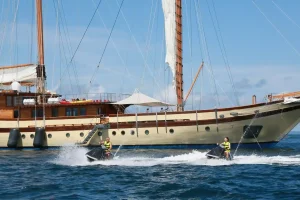
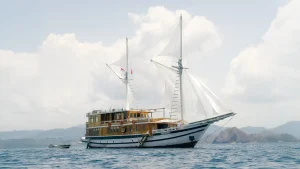
- Phinisi / liveaboard charter boat, 25–40 m, frequent 3–5 day trips: A marina base pays off. Guests board and disembark on a clean, controlled dock; provisioning and fuel turnarounds are faster; crew fatigue from constant tender runs drops.
- Superyacht, 40 m+ with tight guest itineraries: Aim for a confirmed marina berth as primary base, using anchoring only when schedule or size demands. Technical support, security, and guest logistics are too critical to rely entirely on anchorage operations.
- Expedition or dive‑focused vessel roaming the wider Flores Sea: Treat Labuan Bajo as a periodic hub. Come into the marina for full service between long legs; use anchorages around Komodo, Riung, Maumere, and beyond for operational flexibility.
“Labuan Bajo marinas vs anchoring” is not a binary choice. The most effective 2026 Komodo plans I see combine both: a marina berth for key turnover windows and weather‑sensitive periods, plus anchoring and moorings when you want lower costs and more space.
If you are mapping out a Komodo or Flores Sea season for 2026 and want help choosing berths, arranging fuel and permits, or aligning your schedule with sailing windows, contact us directly. Reach our team on WhatsApp at +62 811-3941-4563 or email bd@juaraholding.com and we’ll walk through your vessel, crew, and charter plan step by step.