Where Dock Water Actually Comes From
Ask three piers in Labuan Bajo where their hose water originates and you may get three answers: town municipal supply, a private well, or a tank truck that was filled at a reverse-osmosis plant that morning. All three can be perfectly serviceable; the point is that they are not interchangeable, and the label on none of them is guaranteed. The town’s water infrastructure has grown fast alongside tourism, and in the dry season, when demand peaks exactly as wells run low, source-switching is common. A crew that treats every fill as an unknown until tested is not being paranoid — it is running the only policy that survives contact with a working harbour. We write as independent consultants documenting practice across the waterfront, not as a supplier with water to sell.
The Two-Minute Test Before Any Fill
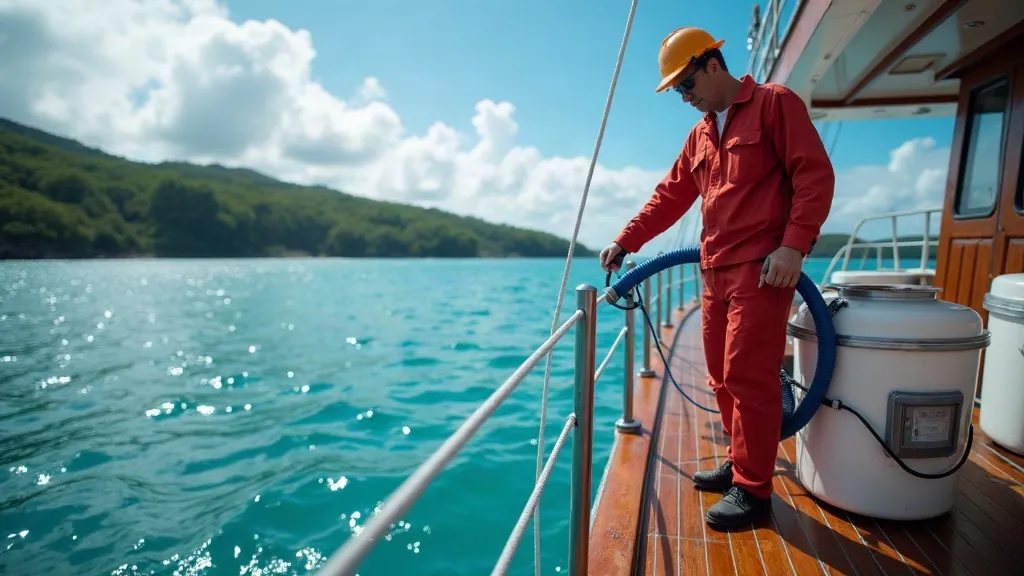
A pocket TDS meter, chlorine strips, and your own nose cover ninety per cent of the risk. Run the hose for a full minute to clear standing water, then test: reverse-osmosis water typically reads very low on dissolved solids, municipal supply reads moderate with a chlorine trace, and a high reading with organic smell means politely declining the fill. Look at the hose itself — a pierside hose that lives in the sun, ends in a puddle, and has no cap is a bacterial culture regardless of what feeds it, so many phinisi carry their own food-grade hose and fittings. Log every fill: date, pier, source claimed, TDS reading. Over a season that log becomes your private map of which docks you trust, and it is exactly the kind of operational discipline our berthing checklist encourages before the first line goes ashore.
Filtration and Tank Discipline Aboard
Even good water deserves a filter at the deck fitting: a simple sediment-plus-carbon cartridge chain protects tanks from grit and taste, and an ultraviolet unit downstream covers the biological tail. But filtration cannot rescue poor tank discipline. Tanks should be shock-chlorinated and flushed at the start of the season, inspection ports opened annually, and the water in them turned over rather than left to stand through a wet-season lay-up. Boats returning from a monsoon mooring should assume tank water is technical until the first fresh cycle — a point worth adding to the recommissioning list alongside the rigging and engine checks covered in our wet-season mooring guide.
Fill-day routine that protects tanks and guests:
- Book the fill or RO delivery a day ahead with the office or agent.
- Run the hose one minute, then test TDS and chlorine before connecting.
- Fill through a sediment-carbon filter chain at the deck fitting.
- Log date, pier, claimed source, and readings for every fill.
- Keep drinking water as a separate verified supply: bottled gallons or visited RO plant.
Drinking Water: the Parallel Supply
Charter operators in Labuan Bajo almost universally run a two-water system: tank water for washing, deck, and engine use, and a verified drinking supply for guests and galley. That supply is either 19-litre bottled gallons delivered by the hundred to the pier, or bulk reverse-osmosis water from a plant the operator has actually visited. RO deliveries by truck or barge price as a modest premium over municipal fills, and for a guest vessel the premium is trivial insurance. Whichever route you take, the cold chain rule applies to water too: store gallons out of the sun, rotate stock, and date every container as it comes aboard.
Fill Day as a Routine, Not an Event
The boats that never have a water problem run fill day like clockwork: book the fill with the berth or delivery a day ahead, test at the hose, filter at the deck, log the numbers, and split supplies between tanks so one questionable fill never contaminates everything. Alongside berths make this easy; on a mooring, water arrives by barge or in the tender by jerry can, which argues for scheduling a short alongside window on provisioning day — the same logistics logic covered in our dockside provisioning guide. Water is the least glamorous line on a charter’s operations sheet and the first one guests notice when it goes wrong; a two-minute test keeps it boring, which is exactly how it should stay.
Water quality alongside is inseparable from discharge discipline; the grey-water and pump-out procedures in use here show how the basin stays clean.
Frequently Asked Questions
Is marina tap water in Labuan Bajo safe to drink?
Treat it as technical water unless verified. Sources vary between municipal, well, and trucked RO supply, so crews test every fill and run a separate drinking supply of bottled gallons or verified RO water.
What should a TDS test show before I fill tanks?
Reverse-osmosis water reads very low on dissolved solids, municipal supply moderate with a chlorine trace. A high reading, especially with any organic smell, is a fill worth declining.
Can I get reverse-osmosis water delivered to the boat?
Yes – RO plants deliver by truck to the pier and by barge or tender to moorings. It prices at a modest premium over standard fills and is the standard drinking-tier choice for guest vessels.
How often should phinisi tanks be cleaned?
Shock-chlorinate and flush at season start, open inspection ports annually, and treat tank water as technical after any monsoon lay-up until the first full fresh cycle has run through.
Good water in Labuan Bajo is entirely achievable – it just has to be verified rather than assumed. To schedule a fill-friendly berth window or a trusted RO delivery, send your requirements through the berthing enquiry desk, or message the team on WhatsApp at +62 811-3941-4563 or bd@juaraholding.com.